Engineered Wood vs Solid Wood Desk
An engineered wood and a solid wood desk age differently in a Singapore flat. What each one really is, how each handles humidity, and what lasts.
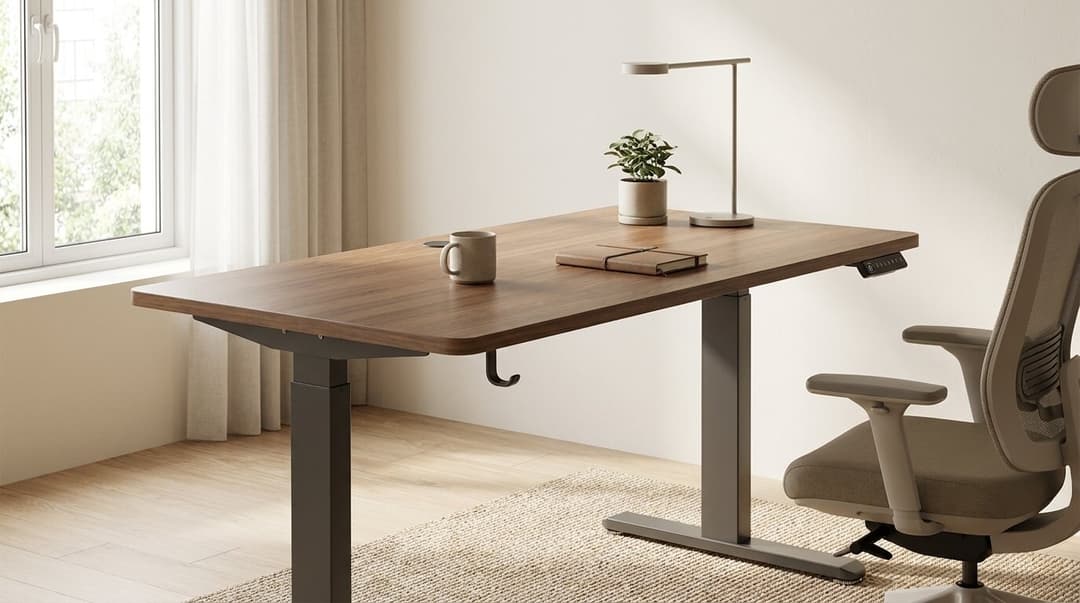
The choice between an engineered wood vs solid wood desk comes down to one question most furniture shops skip: which one holds up to how you actually live and work. Both look like wood. Both can look beautiful. But under daily use, in a Singapore flat, with a motor lifting the whole surface up and down several times a day, they age very differently. Here is what each one really is, and what lasts.
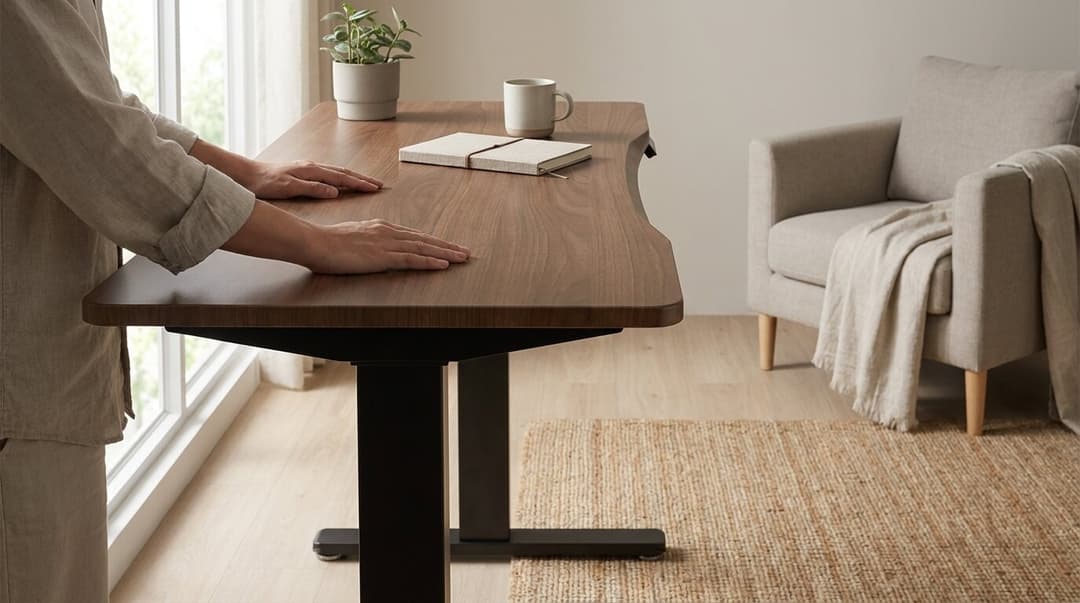
What "solid wood" and "engineered wood" actually mean
Solid wood is exactly that: planks cut from a tree, joined into a slab. It is one continuous material all the way through.
Engineered wood is a category, not a single thing. It covers plywood, MDF (medium-density fibreboard), particleboard (pressed from coarser wood chips), and the finishes laid over them. A good engineered top is built in layers: a dense, stable core with a hard wear surface and a wood finish bonded on top. The point of building it this way is control. You decide the density, the flatness, and how the surface behaves, instead of leaving it to whatever the tree did while it grew.
So the honest framing is not "real wood vs fake wood." It is "natural material vs material that has been engineered to do a specific job." That difference is the whole story.
How they handle Singapore humidity
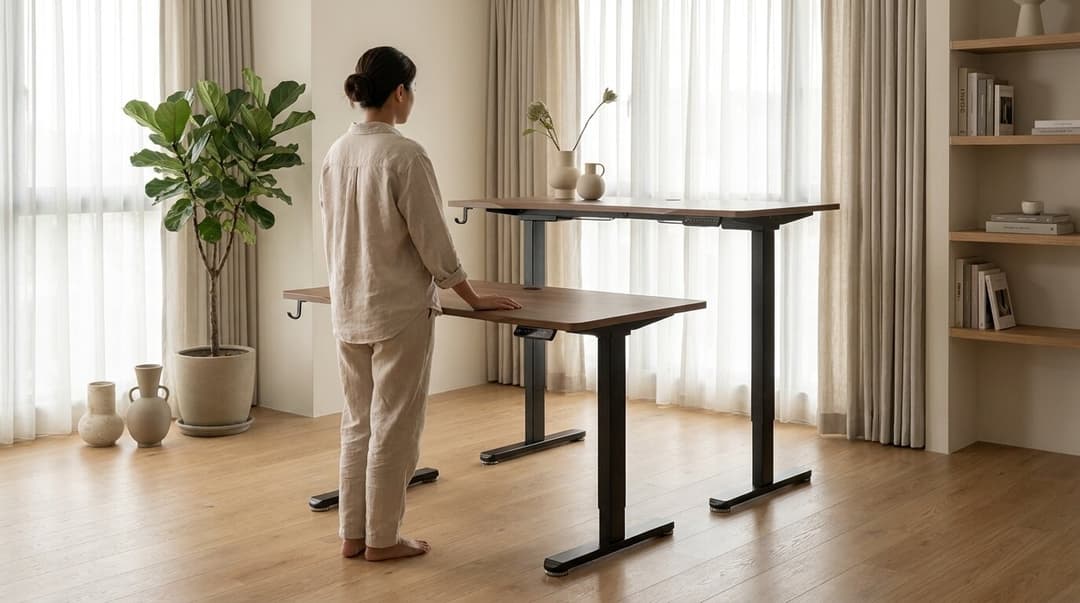
This is where most people get surprised. Wood moves. It absorbs moisture from the air and releases it, and in doing so it expands and contracts. Singapore sits at high relative humidity nearly all year, and a room can swing from a dry, air-conditioned night to a damp afternoon.
Solid wood feels that swing the most. Over months and years, a large solid slab can cup, warp slightly, or open up tiny gaps at its joints as it moves. None of this means solid wood is bad. It means it needs care, a stable room, and sometimes re-oiling to stay flat and sealed.
A well-made engineered core is built to resist that movement. The layered construction and dense fibreboard hold their shape across humidity swings far better than a single slab does. For a desk that has to stay dead flat, so a monitor arm clamps true and a keyboard never sits on a tilt, flatness that stays put matters more than romance about grain.
Weight, motors, and a desk that moves
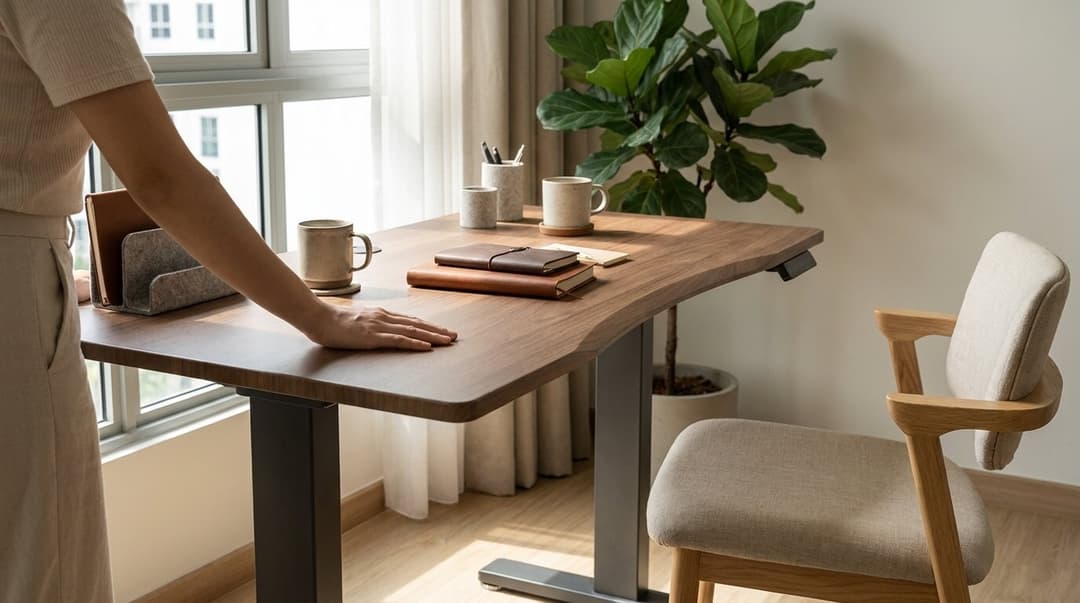
A standing desk is not a static table. The top rides on a motorised frame that raises and lowers it, often many times a day. That changes what you should want from the surface.
A lighter top is easier on the lift mechanism and quicker to adjust. Solid hardwood slabs are heavy, and a wide one adds real load to the motors over time. An engineered top gives you a large, rigid, flat surface at a lower weight, which is kinder to the moving parts that have to carry it for years.
There is also the matter of consistency. Because an engineered top is made, not grown, every unit comes out the same thickness and the same flatness. With solid wood, you take the board you are given, knots and movement included.
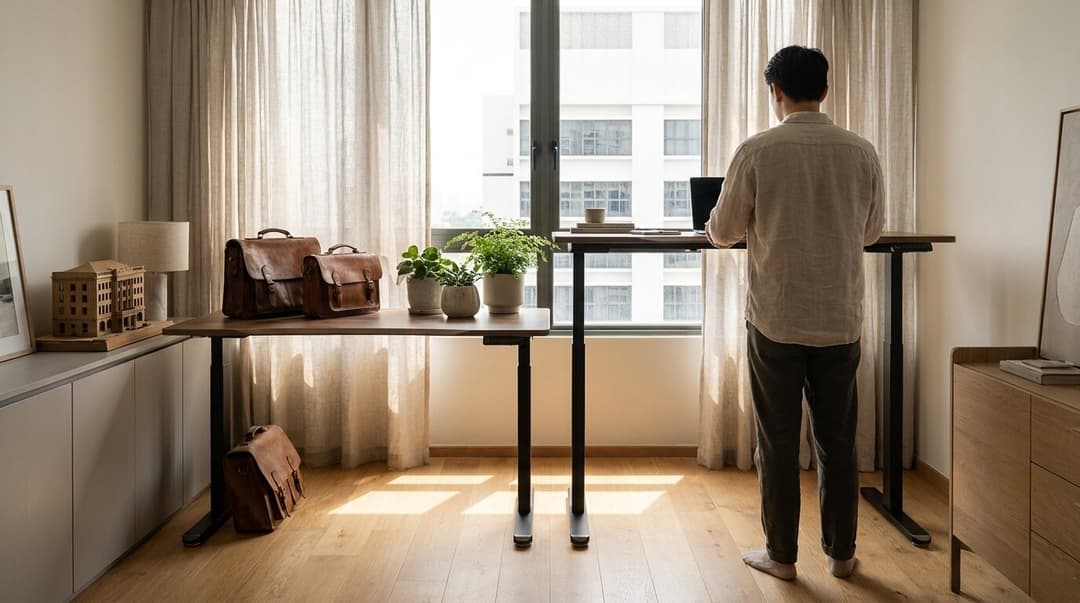
The wear surface is what you touch every day
Here is the part the "solid wood is always better" crowd tends to skip. What protects your desk is not the core underneath. It is the wear layer on top.
A quality engineered desk uses a hard, sealed finish that shrugs off scratches, coffee rings, and the daily drag of a mouse and a laptop. Solid wood, unless it carries a tough finish of its own, can mark, stain, and ding more easily, and an oiled finish needs topping up. For a working surface that earns its keep eight hours a day, a resilient, low-maintenance top is the practical winner.
So which one lasts
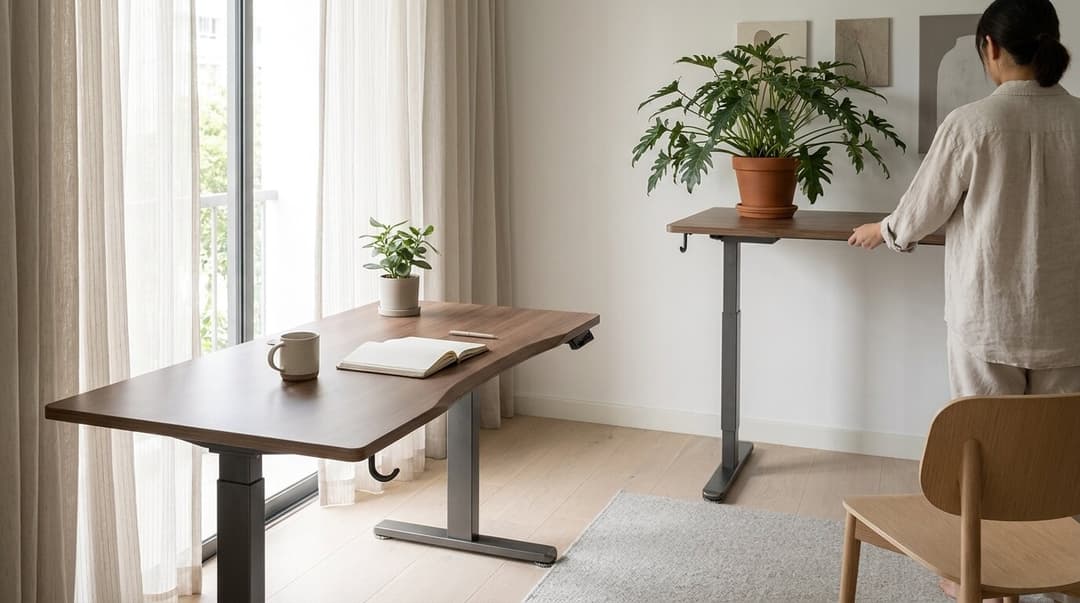
If you want a heirloom dining slab to oil and baby for decades, solid wood has a soul that is hard to argue with. For a desk that has to stay flat through Singapore humidity, sit light on a dual-motor frame, and take daily abuse without fuss, a well-built engineered top is the more durable everyday choice. Lasting is not only about the material being thick. It is about the surface staying flat, sealed, and reliable for years.
That is the thinking behind how we build. The Vival Desk uses a walnut-finish engineered top on a dense MDF core, sized at 120cm by 60cm to fit a real HDB room without crowding it. Engineered, on purpose, to stay flat and keep working as long as you do.
If you have been weighing the two, start with how you will actually use the desk every day. Build around that, and the right answer tends to pick itself.