A Standing Desk Routine That Lasts
A standing desk routine is what makes the desk matter. How to build one that survives past week two, without standing all day or watching the clock.
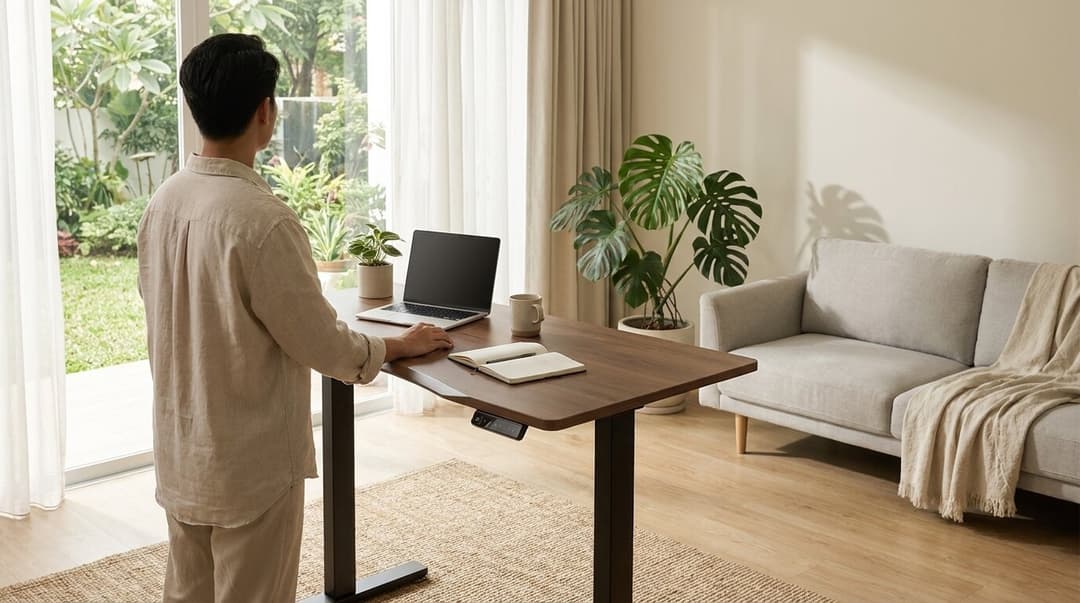
A standing desk routine is the difference between a desk that changes how you work and one that quietly stays parked at sitting height. Most people buy the desk, raise it once, feel the novelty, then drift back to sitting all day by week two. The desk was never the problem. The habit was missing. So let's build one that actually holds.
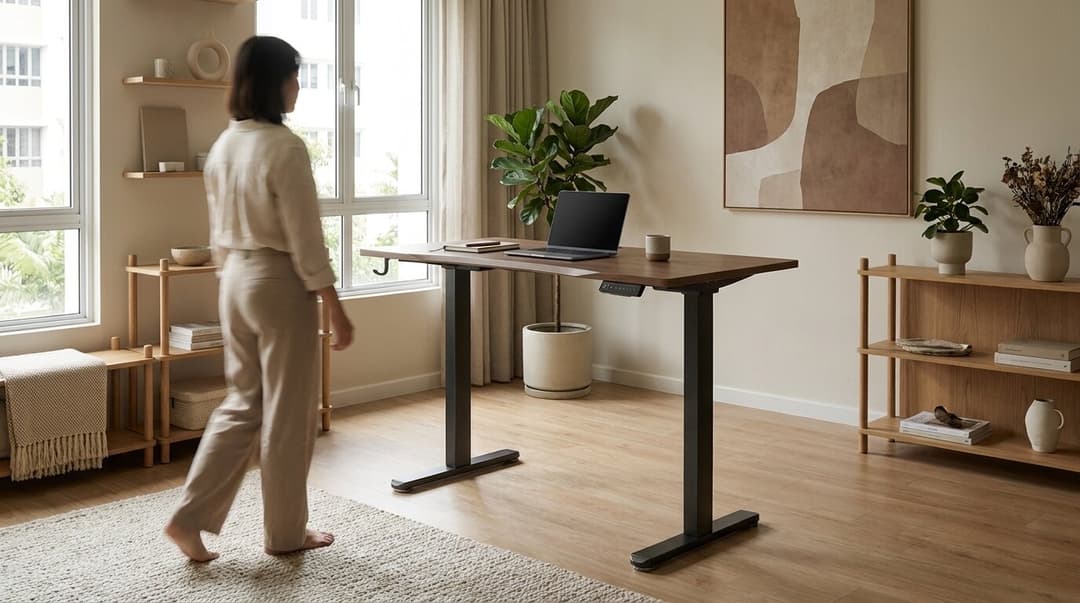
Start smaller than you think
The biggest mistake is standing for three hours on day one. Your legs ache, your back complains, and your brain files standing under "punishment." Then you stop.
Begin with short, repeatable blocks instead. Stand for the length of one task: a single email thread, one call, the first 20 minutes after lunch when sitting makes you sleepy anyway. Sit back down before you feel tired, not after. The goal in week one is not endurance. It is teaching your body that moving between sitting and standing is normal, easy, and yours to control.
The World Health Organization recommends reducing and breaking up long stretches of sedentary time, and replacing some of it with light activity (WHO physical activity guidance). A standing desk routine is one practical way to do that during a working day, and small blocks count.
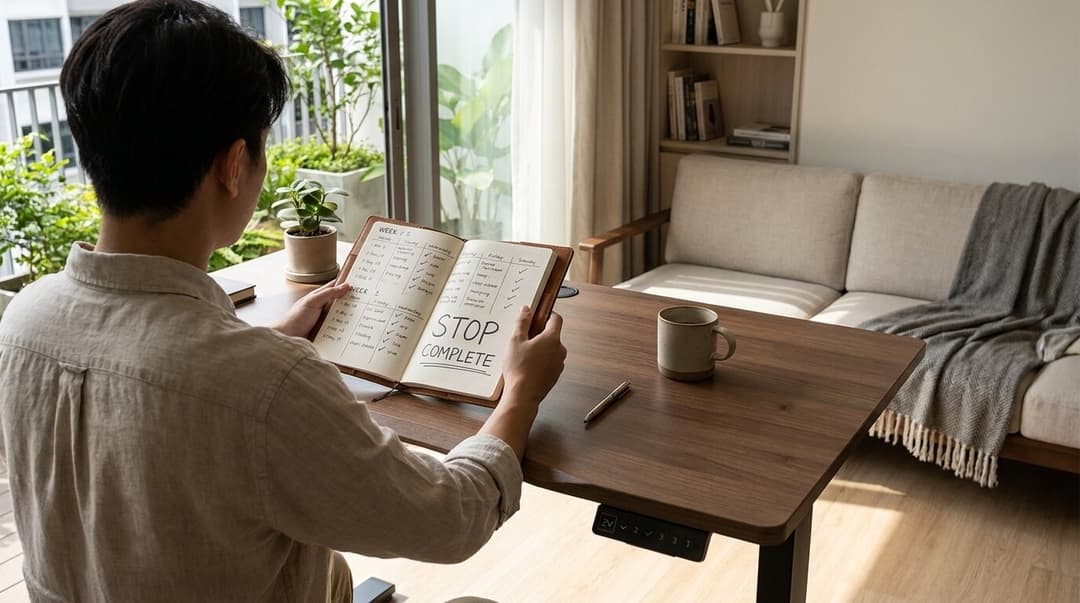
Anchor standing to things you already do
Willpower fades by mid-afternoon. Habits that survive are tied to a trigger that already exists in your day.
Pick anchors you never skip and attach standing to them:
- Stand for every phone or video call.
- Raise the desk when you come back from lunch.
- Stand while you read, sit while you type, if typing feels steadier seated.
- Drop to sitting when you start focused, detailed work that needs stillness.
These are cues, not rules to obey perfectly. The point is that you stop deciding from scratch every hour. The call starts, you stand. No debate.
If you want the bigger picture on how sitting and standing trade off through a work-from-home day, we wrote about that here: sitting vs standing: building a healthier work-from-home habit.
Use presets so the friction disappears
A routine dies on friction. If raising the desk takes effort, fiddling, or guesswork, you simply won't.
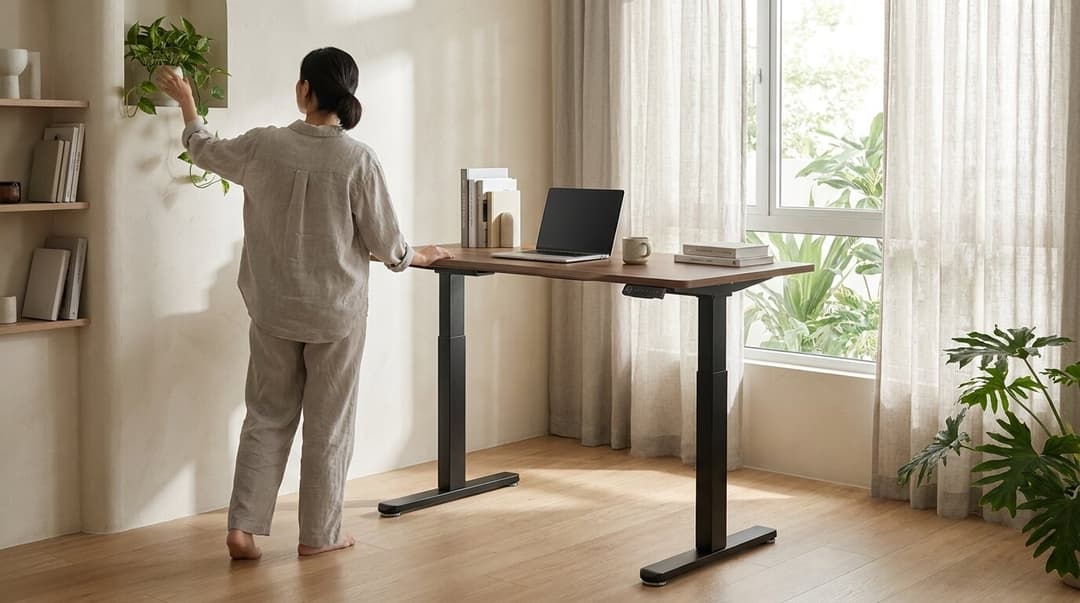
This is where memory presets earn their place. Save your seated height and your standing height once. After that, one tap moves the desk to exactly where your elbows want to be, and the digital display confirms it. The projectvival desk uses three presets and a dual-motor lift, so the transition is a single press rather than a small chore. When the switch costs you nothing, you do it ten times a day without thinking.
Set your heights properly, once
Get the ergonomics right at the start and you remove a whole category of excuses. A common reference point: elbows at roughly 90 degrees with forearms parallel to the floor, screen near eye level, wrists relaxed and straight. Save that as your standing preset. Do the same seated. You only do this once, and every session after it is correct by default.
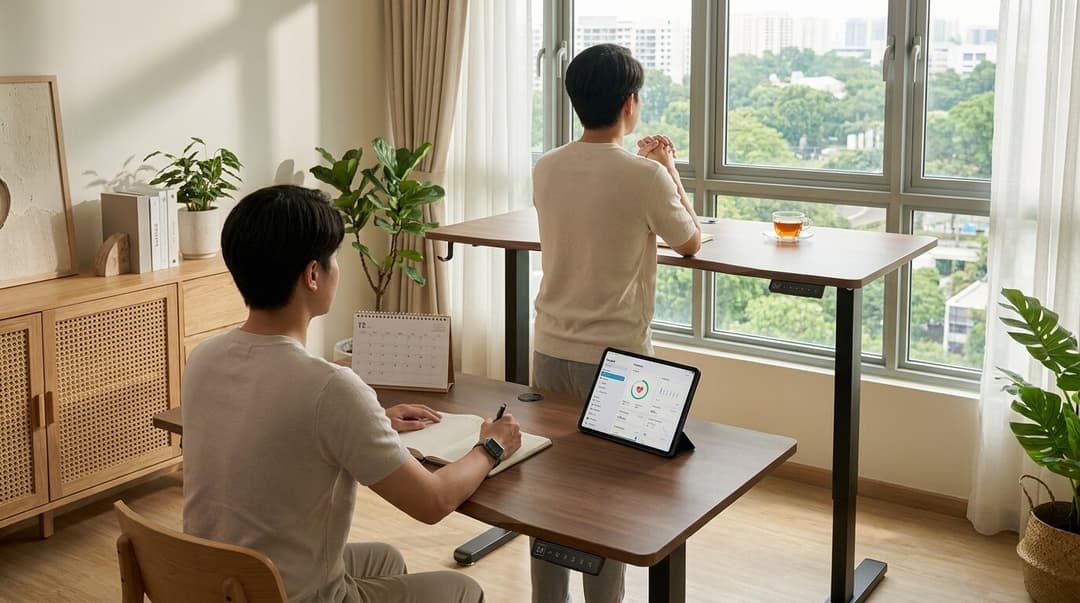
Move, don't just stand
Standing still all day is not the win. Long static standing has its own downsides, and the research consistently points to the same idea: the body likes change, not a new fixed posture.
So treat the desk as a permission slip to move. Shift your weight. Take a call pacing the room. Roll your shoulders when you raise the desk. The aim is variety across the day, not a record-breaking standing streak. Sit when you need to focus deeply. Stand when you feel yourself slumping or fading. Let how you feel drive the desk, and let the desk make acting on it effortless.
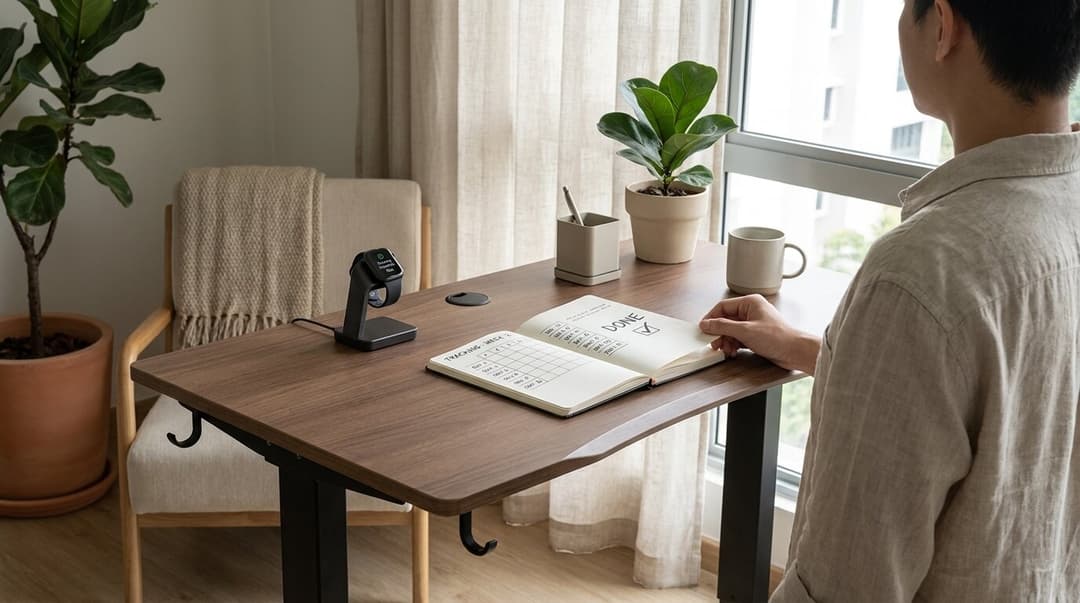
Track it for two weeks, then stop tracking
For the first two weeks, keep it visible. A note on your phone, a tally, a recurring calendar nudge at 11am and 3pm that simply says "height check." You are not measuring performance. You are reminding yourself the option exists until reaching for it becomes automatic.
After two weeks, most people no longer need the prompt. Standing for the lunch call and sitting for deep work has quietly become how they work. That is the whole goal: a routine you no longer have to think about.
A desk should give you something back. More energy at 5pm. Less stiffness. A body that feels less stuck. Build the habit slowly, anchor it to your day, and remove every ounce of friction between you and the next position.
If you want a desk built to make that switch effortless, with presets that move it in one tap, look at the Vival Desk and its three saved heights. Live more.