Dual Motor Standing Desk Benefits at Home
What a dual motor standing desk actually gives you day to day: steadier lifting, less wobble at height, quieter travel, and more weight on the top.
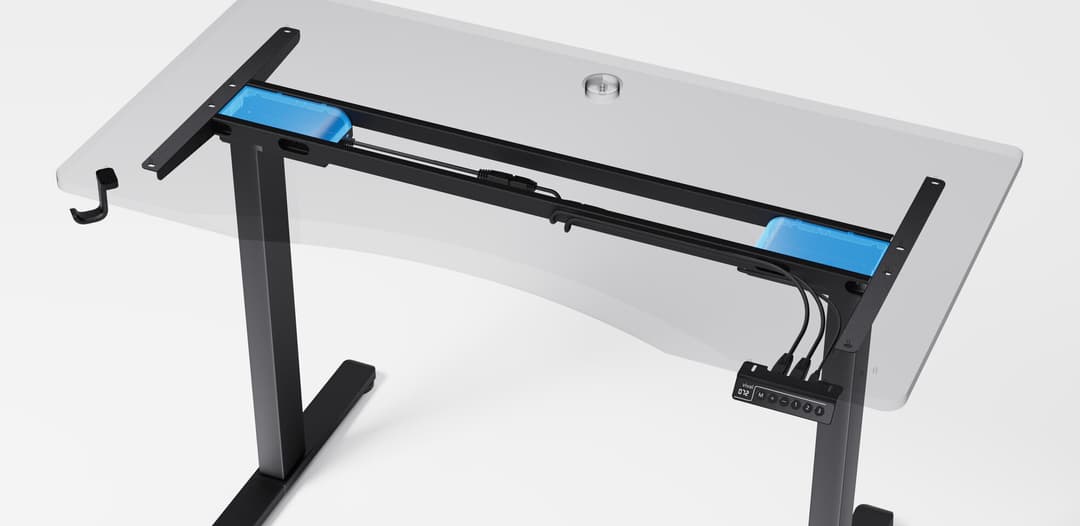
Most people meet the phrase "dual motor" while shopping and treat it as a spec-sheet checkbox. It is easier to understand as a description of how the desk will feel every day: how steady it is under a full setup, how quietly it moves during a call, and how well it ages after a few years of daily use. This article is about those real, in-use benefits, written to be useful first and to sell second. If you are still weighing the buy decision itself, our companion piece on dual motor vs single motor covers that head-to-head; here we stay on the benefits.
What "dual motor" actually means
A dual-motor standing desk places a dedicated, independently controlled motor inside each leg. A single-motor desk uses one motor to drive both legs through a rotating transfer rod, so one engine does all the lifting and drags the second leg along with it (Eureka Ergonomic).
That structural difference is the whole story. Because two motors share the workload, a dual-motor desk handles more weight without strain and transitions between sitting and standing faster and more smoothly, while a single motor bears the entire load and typically travels slower with a lower weight capacity (Eureka Ergonomic). Everything below follows from that one design choice.
Benefit 1: Stability under load, where it counts
Dual-motor frames usually handle weight more evenly and often feel smoother during height adjustment, which matters most for setups with dual monitors, monitor arms, or a large, heavy tabletop (Standesk). Each column is driven directly rather than dragged, so the surface stays level as it travels.
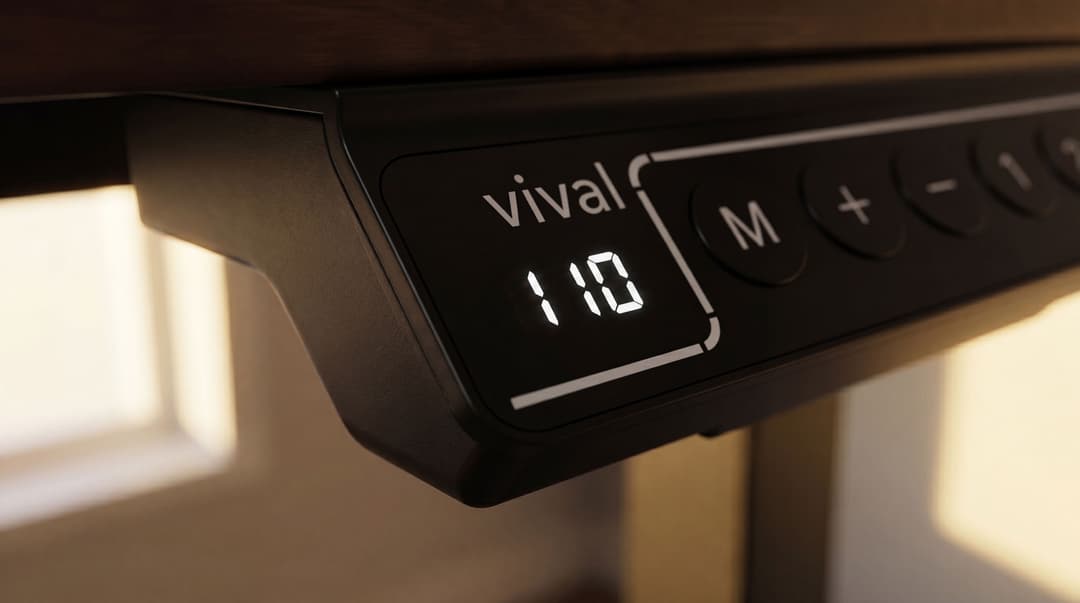
Honest caveat: motor count alone does not eliminate wobble. A dual-motor frame with poor structure can still shake, because stability also depends on frame design, multi-stage leg construction, a solid steel cross-beam, tabletop size and load, and wobble becomes more noticeable the higher the desk is raised (Standesk). So read the whole frame, not just the motor number. The Vival Desk pairs two motors with a rated capacity of up to 100kg and three memory presets for exactly this reason.
Benefit 2: Faster, smoother sit-to-stand you will actually use
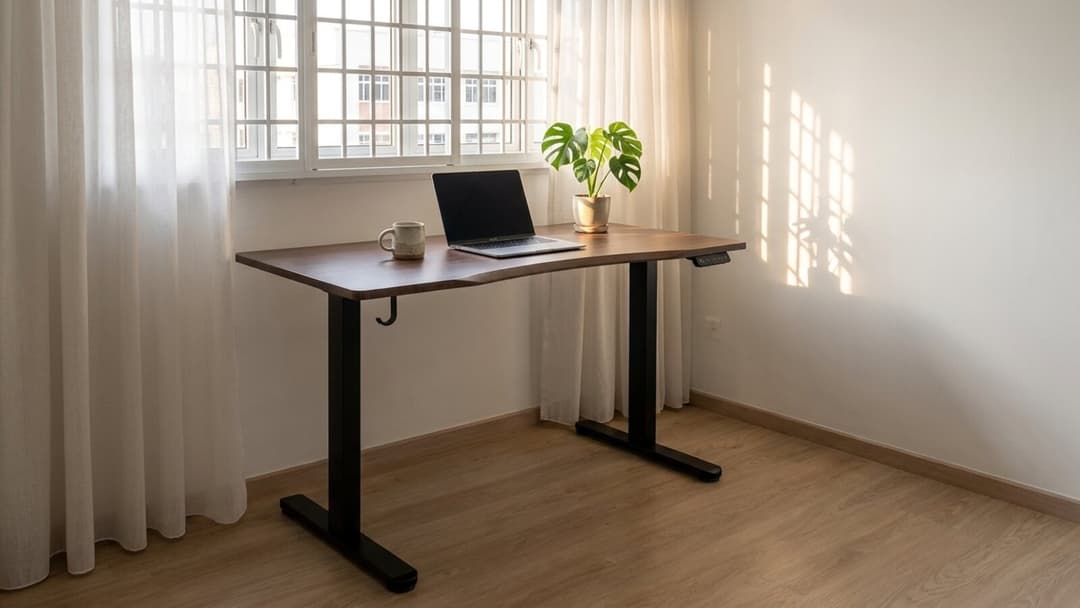
A quality dual-motor desk should achieve a lifting speed of roughly 30–40 mm/s even when carrying a substantial load; entry-level systems run about 20–25 mm/s and premium ones exceed 40 mm/s (Eureka Ergonomic). That may sound like a small detail, but speed is what keeps a sit-stand routine alive. If the change takes a couple of seconds, you make it; if it drags, you skip it and stay seated. Advanced systems also use sensors to keep both legs in unison, and a synchronization drift of less than 3mm is a benchmark for a stable, level rise (Eureka Ergonomic).
Benefit 3: Quieter operation for calls, shared rooms and late-night study
Because each motor is under less strain, a dual-motor system can be engineered for quieter operation, with high-quality motors and controllers running below 50 dB, roughly a quiet library (Eureka Ergonomic). That is the difference between raising your desk mid-meeting and waiting for a gap.
Honest caveat: quiet is not automatic. Noise depends on motor quality, frame design and load, and two lower-quality motors can create more vibration than one well-built motor (Vvenace). Two motors help, but build quality decides.
Benefit 4: Higher, evenly shared weight capacity
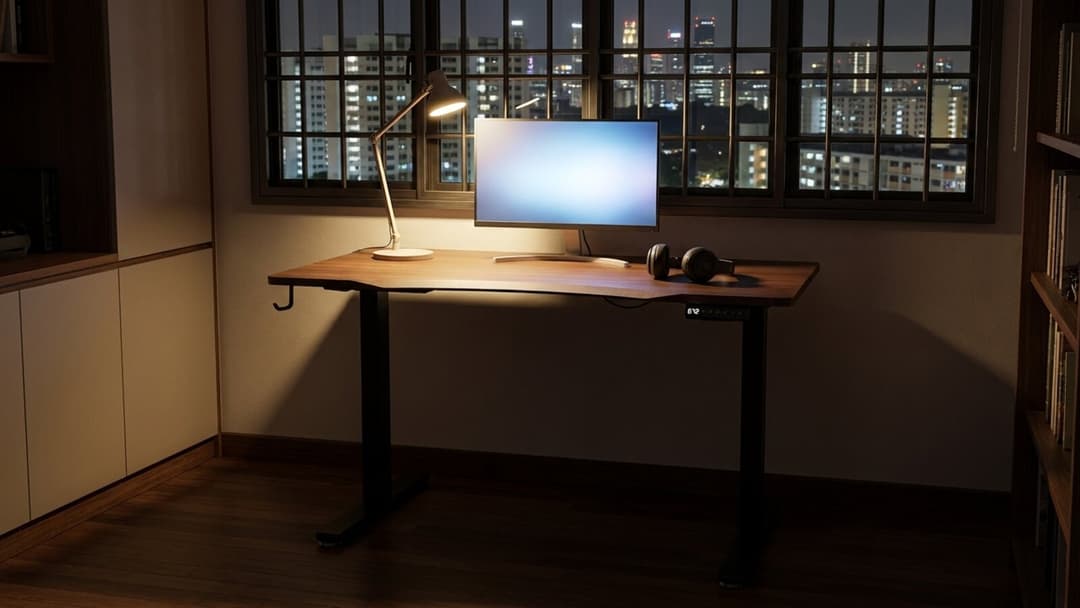
A well-engineered dual-motor desk should lift at least 100kg smoothly, and you should judge it by dynamic load capacity, the weight it can safely raise and lower, not just static load, the weight it holds while stationary (Eureka Ergonomic). For durability and structural adequacy, the industry testing framework is set by BIFMA, the furniture standards body. Real desks accumulate weight: a tower, two monitors, a stack of textbooks. Shared, balanced lifting is what carries it without complaint. The Vival Desk is rated to move up to 100kg.
Benefit 5: Built to last, and value over time
In single-motor desks the mechanical linkage between the legs can wear unevenly over time, potentially causing one side to lag behind the other; dual, independently controlled motors avoid that shared-linkage wear (Eureka Ergonomic). Fewer shared moving parts under strain generally means a desk that still feels solid years in, with headroom as your setup grows (Standesk). We back the Vival Desk with a 1-year warranty, honest coverage rather than a promise it will never need attention.
The electric study desk case: students and shared households
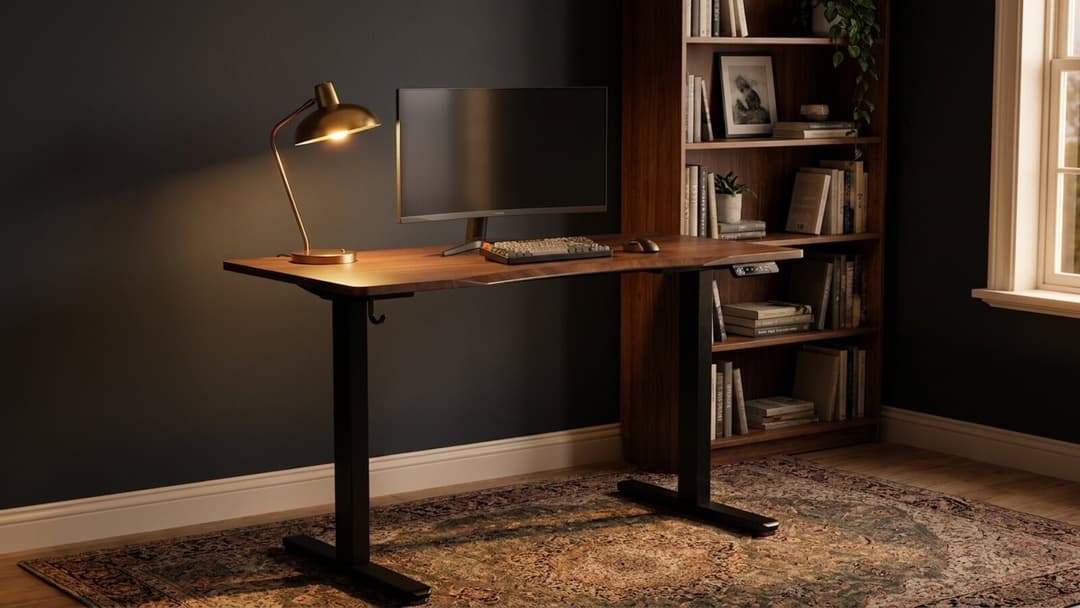
A height-adjustable study desk earns its keep in a way a fixed desk cannot: it grows with a child, adapts to a growing teenager, and resets in one touch for the next person. Memory presets that save preferred sitting and standing heights make one-touch adjustments easy, which helps a household share a single desk and helps anyone stick to a consistent routine (Eureka Ergonomic).
For students, the quiet, stable lift matters during long study blocks and late-night revision, and the weight capacity comfortably carries a laptop, an external monitor and a term's worth of books. Households with children or pets also benefit from an anti-collision system, which uses sensors to detect an impact or tilt and immediately stop and reverse the motors to prevent damage or injury (Eureka Ergonomic). If you are furnishing a first home office or a BTO study, our guide on how to choose a standing desk walks through size, height range and stability in plain terms.
A desk is a tool, not a treatment
Let us be precise about health, because the honest framing matters. A sit/stand desk lets you alternate between sitting and standing so you can vary your body position more often; that is the mechanism, and standing too long carries its own downsides, including foot, knee, hip and back discomfort (CCOHS). A peer-reviewed review notes that prolonged sitting at work is a risk factor for musculoskeletal issues and that height-adjustable workstations have helped office workers sit less (NIH/PMC). The desk does not treat or cure anything. It simply makes changing posture easy enough that you do it.
Practical setup, drawn from ergonomics bodies:
- Set the surface to about your standing elbow height, keep the keyboard and mouse aligned as when seated, and place the monitor between horizontal and roughly 30–35 degrees below eye level (CCOHS). A properly adjusted workstation is fundamental to comfort and adequate leg clearance (OSHA).
- Alternate as needed. Recommended rhythms range widely, and Cornell researchers suggest a 20-8-2 cycle: about 20 minutes sitting, 8 standing, and 2 moving or stretching (Cornell Ergonomics).
- Use supportive footwear and an anti-fatigue mat where appropriate, shift your weight, and still take breaks away from the screen to rest your eyes (CCOHS).
How to get the stability you paid for
The most common cause of desk wobble is unlevel feet. After assembly, level the adjustable feet, tighten all fasteners, especially legs-to-top and the cross-beam, then cycle the desk through its full range and program your heights (Eureka Ergonomic). Ten minutes here is the difference between the rated stability and a desk that never quite feels right.
Frequently asked questions
Is a dual motor standing desk worth it? For most home offices and shared study desks, yes. Two motors share the load, so the desk lifts more weight, moves faster and more smoothly, and avoids the shared-linkage wear a single motor can develop over time. A very light, never-changing setup can manage on a single motor.
Is a dual motor standing desk more stable? Usually, because both legs are driven directly and weight is shared more evenly, but not automatically. Frame design, leg construction, the cross-beam, tabletop size and level feet all affect wobble, which grows more noticeable at full height. Judge the whole frame, not just the motor count.
Are dual motor standing desks quieter? They can be. Splitting the load lets each motor run under less strain, and quality systems operate below 50 dB. But quiet depends on build quality. Two cheaper motors can vibrate more than one good one.
Is a height-adjustable desk good for students? It suits students and shared households well: memory presets let several people share one desk, it adjusts as a child grows, and it carries a laptop, monitor and books. Remember it is a tool for varying posture, not a health treatment.
The Vival Desk at a glance
Built dual-motor, matte walnut finish, 120x60cm surface, 72–120cm height range, rated up to 100kg, with three memory presets. S$289 with code VIVAL60 (list S$349), free delivery across Singapore, a 1-year warranty, and a real Singapore showroom if you would like to see it move in person.
If two motors sound like the right foundation for your desk, take a closer look at the Vival Desk. And if you are still deciding, the dual motor vs single motor comparison will help you settle it.