Single vs Dual Motor Standing Desk
Single vs dual motor standing desk, decided on what you actually feel: wobble at standing height, lifting speed, noise, and how much the top holds.
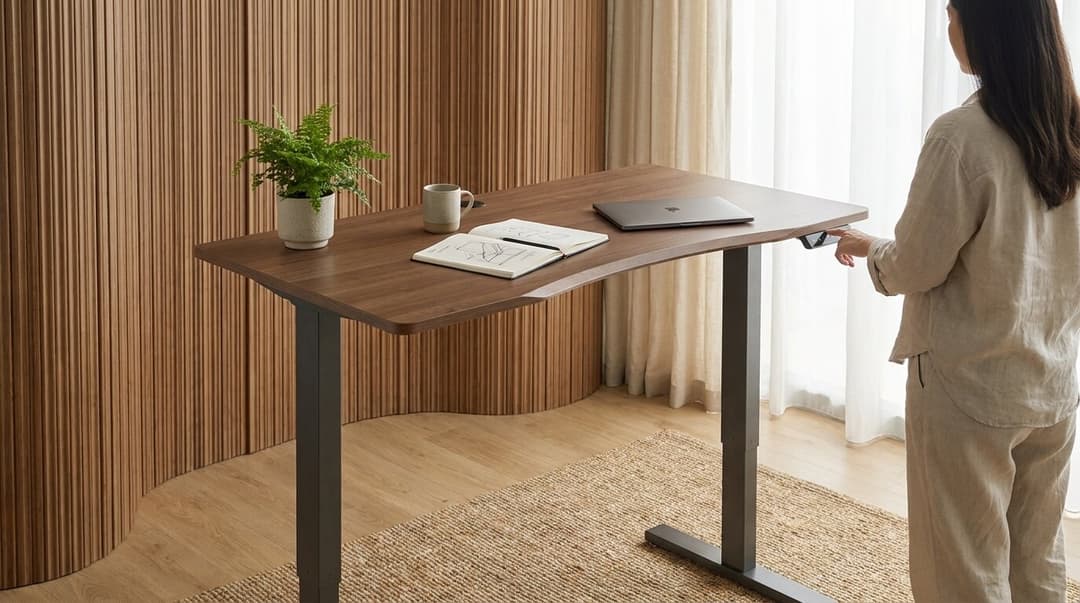
The dual motor vs single motor standing desk question comes up the moment you start shopping, and the answer shapes how the desk feels every single day. Most of the price gap, the wobble, the noise, the speed, it traces back to one thing: how many motors are doing the lifting. So before you compare finishes or memory presets, it helps to understand what is actually happening under the desktop.
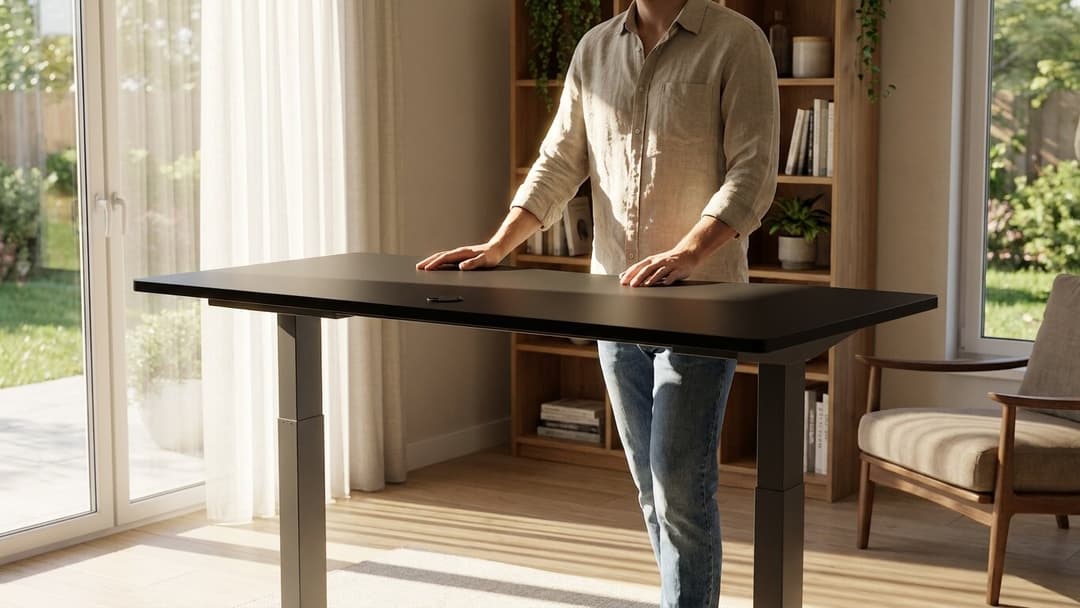
What a motor actually does on a standing desk
A height-adjustable desk rises on legs. Inside each leg is a column that telescopes up and down. A motor drives that movement.
On a single-motor desk, one motor does the work and a connecting rod or belt drags the second leg along with it. One engine, two legs, sharing the load.
On a dual-motor desk, each leg has its own motor. Both lift at the same time, in step, each carrying its own side.
That structural difference is the whole story. Everything you feel when you press the button comes back to it.
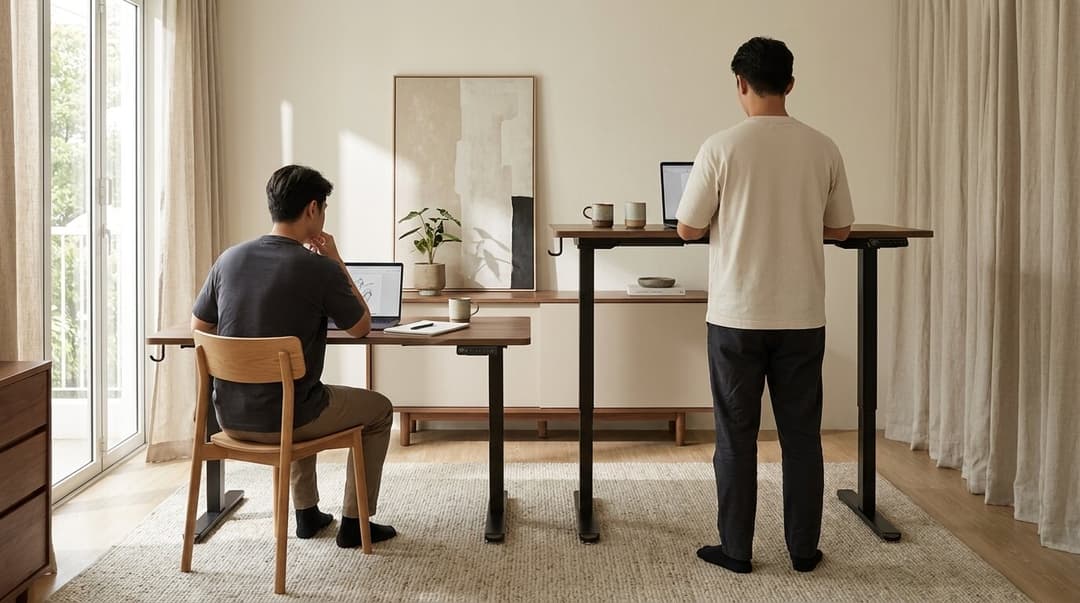
Single motor: the trade-offs
A single motor keeps the build simpler and lighter on cost. For a light setup, a laptop, a lamp, a notebook, it can do the job.
The compromises show up under load and over time. Because one motor pulls both legs through a linkage, the lift is often slower and the two legs can fall slightly out of sync, which you notice as a small lean or a less stable feel near full height. Pile on a monitor or two, a heavy mechanical keyboard and a stack of books, and a single motor has to strain through that linkage to move it all. More strain usually means more noise and more wear over the years.
It is the kind of thing that feels fine in the showroom and starts to nag at you by month six.
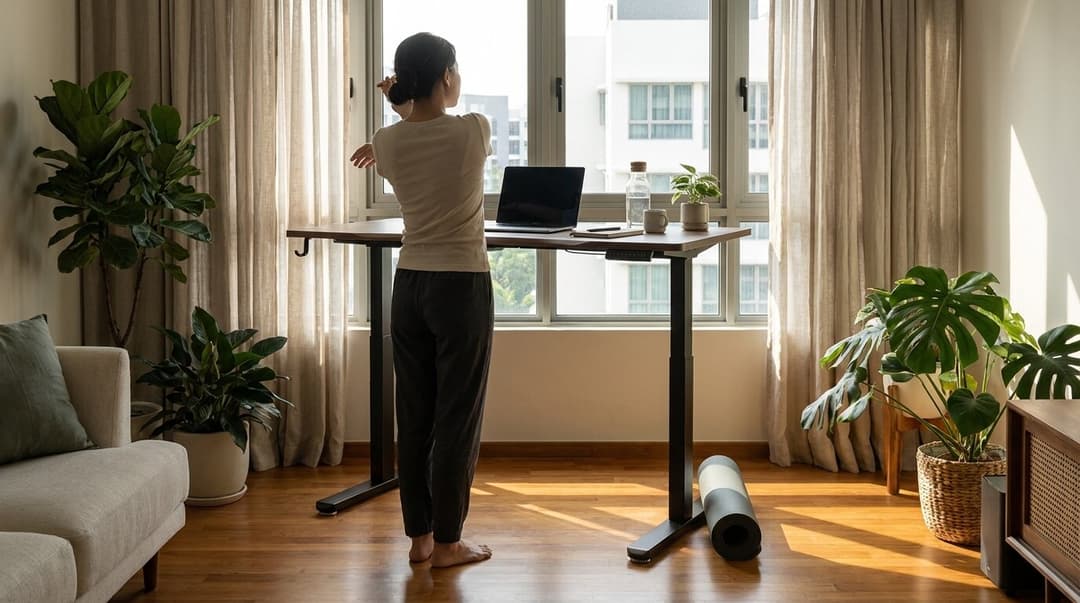
Dual motor: why two engines change the experience
Give each leg its own motor and the load splits in half. Each motor carries one side, so neither has to fight.
In practice that tends to mean a steadier rise, a quieter motion, and a more even surface as the desk travels, because both columns are driven directly rather than dragged. It also means more comfortable headroom for a fuller setup: dual screens, a docking station, the things a real workspace collects.
There is a calm to it. You tap the height you want and the desk simply goes there, level and unhurried. That is the feeling worth paying attention to, because it is the one you live with.
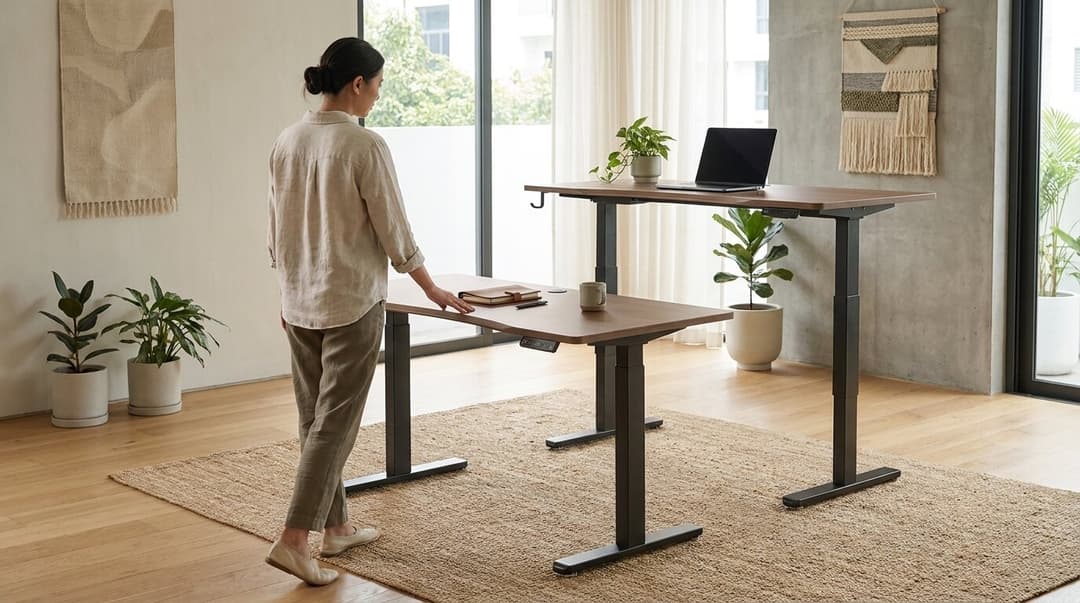
The projectvival desk is built dual-motor for exactly this reason. It pairs two motors with three memory presets and a digital display, so your sitting and standing heights are one touch away, every time. We would rather over-build the part you never see than cut it to hit a lower number.
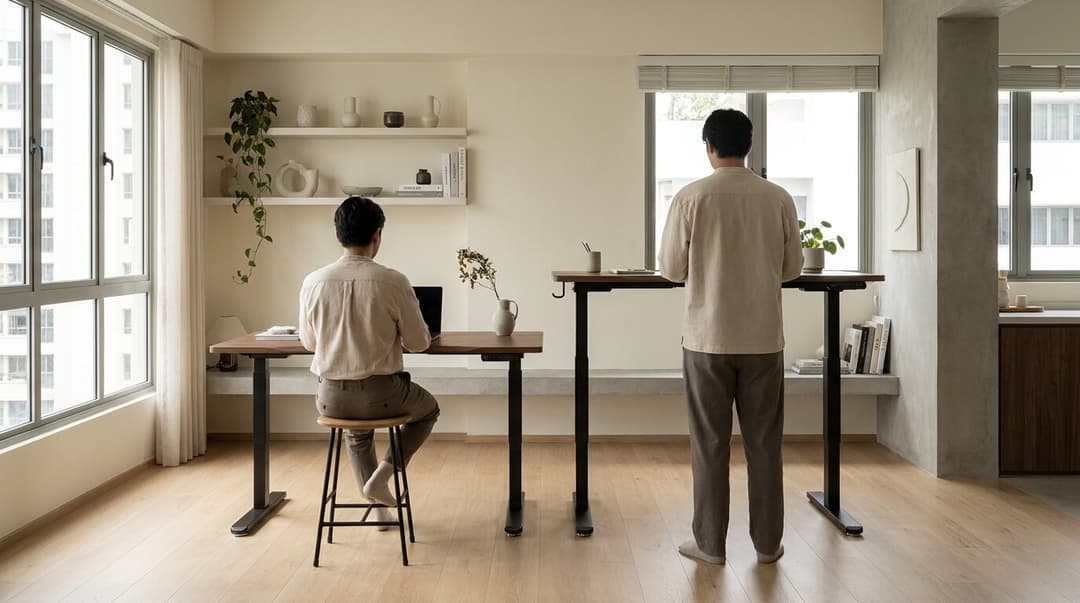
The health angle, honestly
People often buy a standing desk to sit less. That instinct has support: the World Health Organization recommends that adults limit their sedentary time and replace some of it with activity of any intensity, and Singapore's national guidelines advise breaking up sedentary time through the day.
Worth being precise here. A desk does not treat or prevent anything. What helps is the behaviour, moving more, sitting less, changing posture through the day. A desk simply makes that switch easy enough that you actually do it. And a dual-motor desk that rises smoothly and quietly removes one more excuse not to, because the change takes a couple of seconds and does not announce itself to the whole room.
So which should you choose?
If your setup is genuinely minimal and stays that way, a single motor can be enough.
For most people who want a desk to last, carry a real workload, and feel solid years from now, dual motor is the safer call. The extra engine is not a luxury spec. It is the difference between a desk that performs once and a desk that keeps performing.
A few honest questions to settle it:
How much will the desk carry? Add up your heaviest day: monitors, dock, gear. The more weight, the stronger the case for dual motor.
How often will you move it? A desk you raise and lower several times a day rewards a smoother, quieter, faster lift. One you set once and forget asks less of the motors.
How long do you want it to last? Two motors sharing the load tend to age better than one motor straining alone.
If you want to think it through properly, our guide on how to choose a standing desk walks through height range, desktop size, stability and the rest. And when you are ready to see the desk we built around two motors, it is on the Vival Desk product page.