How to Choose a Standing Desk
How to choose a standing desk without guessing: electric or manual, the right size for an HDB or BTO room, the height range, the load and the frame.
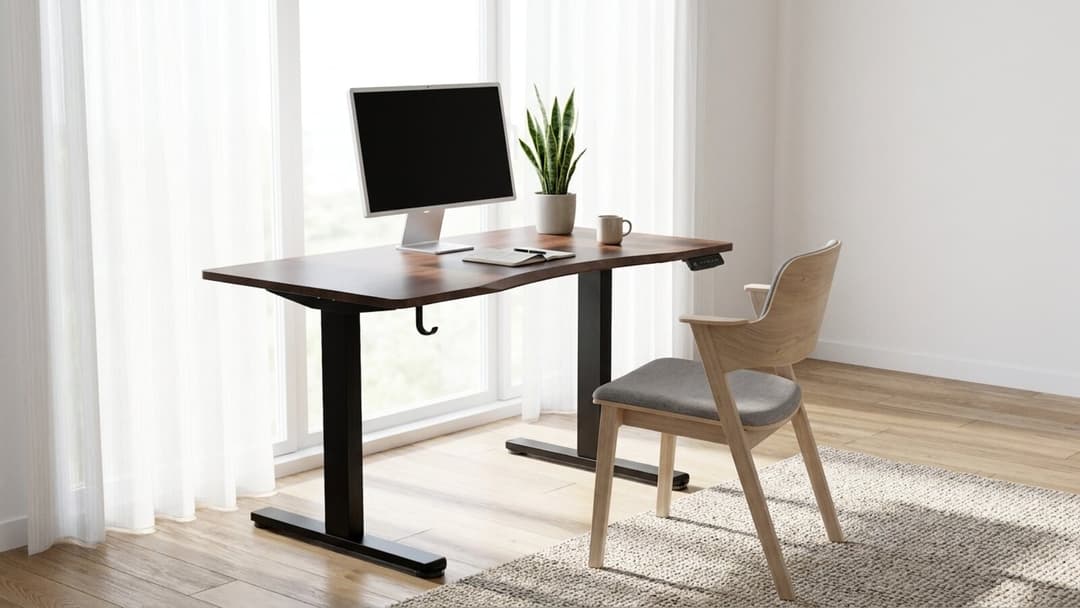
A standing desk is one of the few pieces of furniture you touch for eight hours a day, so it is worth choosing well rather than quickly. This guide walks through what actually matters when you buy a sit-stand desk in Singapore, in plain terms, so you can judge any desk on its merits, including ours. It is written to be useful first and to sell second.
A note before specs: a standing desk is a tool, not a treatment. The World Health Organization and Singapore's national guidelines ask adults to limit sedentary time and break up long periods of sitting, but the desk does not do that for you, the habit of alternating sitting and standing does. Treat any "health" claim, from us or anyone else, with that hedge in mind.
Electric or manual?
There are three common mechanisms in Singapore.
- Dual-motor electric. Two motors, one in each leg, raise and lower the desk together at the touch of a button. They are the smoothest, the quietest, the steadiest under load, and the easiest to use daily, which matters because a desk you have to fight is a desk you leave at one height.
- Single-motor electric. One motor drives both legs through a shaft. Cheaper, but typically slower, noisier, and less stable when the desk is loaded unevenly.
- Hand-crank manual. No electricity, lowest price, but you have to crank it every time, which in practice means most people stop adjusting it.
For a desk you will change height on every day, dual-motor electric is the option most people are happiest with over time. If budget is tight and you rarely change height, a manual desk is honest value.
What size fits a Singapore home?
This is the question most specific to Singapore, where many of us work in HDB flats, BTO units, and compact home offices.
- 120 x 60 cm is the sweet spot for most local rooms. It is wide enough for a monitor or two, a laptop and the things you actually keep on a desk, and shallow enough at 60 cm to leave floor and walking space behind it in a study corner or bedroom.
- 140 cm and wider suits a dedicated study or a dual-monitor power user, but can dominate a small room.
- Under 100 cm starts to feel cramped once a monitor and keyboard are on it.
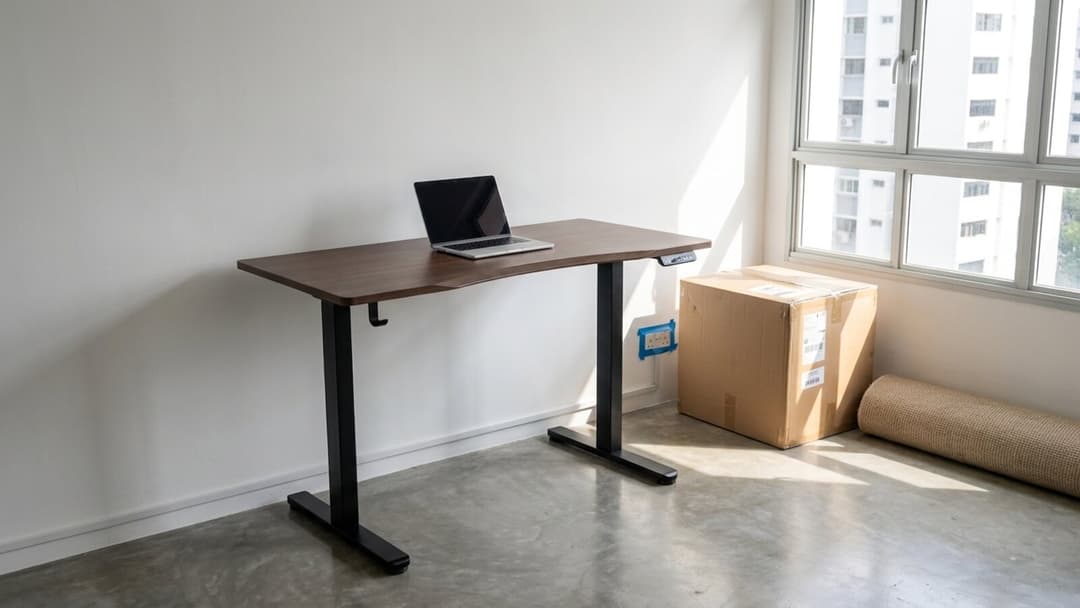
Measure your corner before you buy, not after. A 120 x 60 cm desktop needs roughly 1.2 m of wall and about 60 cm of depth, plus clearance to sit and stand.
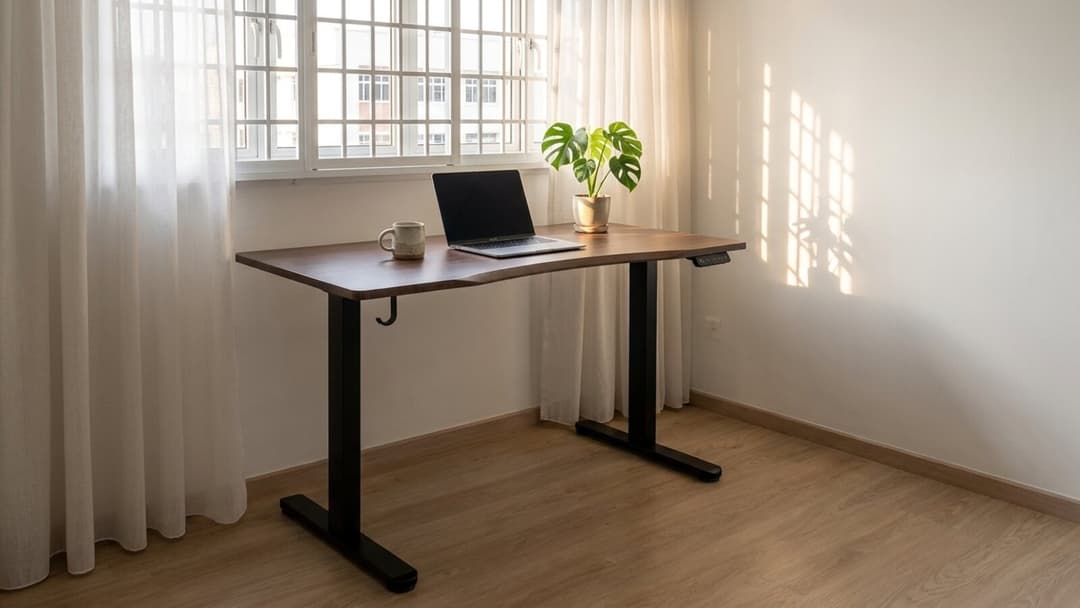
Height range: does it actually fit you?
A standing desk only works if it reaches both your comfortable sitting height and your comfortable standing height. A common usable range is around 72 to 120 cm. As a rule of thumb, set the desk so your elbows rest at about 90 degrees with your wrists flat, whether you are sitting or standing; the US OSHA computer-workstation guidance describes this neutral posture. Taller users should check the maximum height, shorter users the minimum, and households sharing a desk should look for memory presets so each person gets their setting back with one press.
Load capacity and frame stability
Two numbers tell you whether a frame is serious.
- Rated load. A frame rated to around 100 kg comfortably carries two monitors, a monitor arm, a laptop and your everyday clutter with margin to spare. Be wary of very low ratings.
- Stability at standing height. The real test is wobble when the desk is raised and loaded. A reinforced metal frame with a stable foot resists the shake that makes typing at standing height unpleasant. If you can, look for a genuine load or stability test figure rather than a bare number on a banner.
The desktop: finish, material, and a word on honesty
Most affordable desktops in this category are an engineered-wood core with a laminate surface (a printed wood-look layer bonded onto the board), not solid timber, regardless of how the listing reads. That is not a problem; laminate is hard-wearing, low-glare and holds its look. What matters is that the seller is straight with you about it. If a page says "solid wood" or "live edge" at a laminate price, be sceptical. A matte, low-glare finish is easier on the eyes under both daylight and screens.
Controls and memory presets
Look for a simple keypad with a digital height display and memory presets (typically three): press a number and the desk glides to a saved height. Presets are what turn a standing desk from a novelty into a habit, because changing posture becomes one touch instead of a decision.
Delivery, assembly and warranty in Singapore
The parts that frustrate buyers most are usually the boring ones.
- Delivery. Check it ships within Singapore, whether delivery is included or added at checkout, and the realistic timeline (often a few business days).
- Assembly. Most sit-stand desks are self-assembly and go together in under an hour with a few bolts. If you would rather not, ask whether paid assembly is available.
- Warranty. Warranties in this category vary widely. Read what is actually covered (motors and frame versus cosmetic wear), for how long, and how a claim works. In Singapore you also keep your statutory rights under the Consumer Protection (Fair Trading) Act and the Lemon Law for goods that are faulty, on top of any voluntary warranty.
How to think about price
Prices in Singapore run from budget flat-pack desks to four-figure ergonomic brands. More money usually buys a smoother, quieter, more stable mechanism, a better finish, and a longer warranty, up to a point; beyond that you are often paying for brand. Decide which of those you actually value, then ignore the rest. A genuine all-in price with free delivery is easier to compare than a low headline price with delivery and add-ons stacked on at checkout.
Where the Vival Desk fits
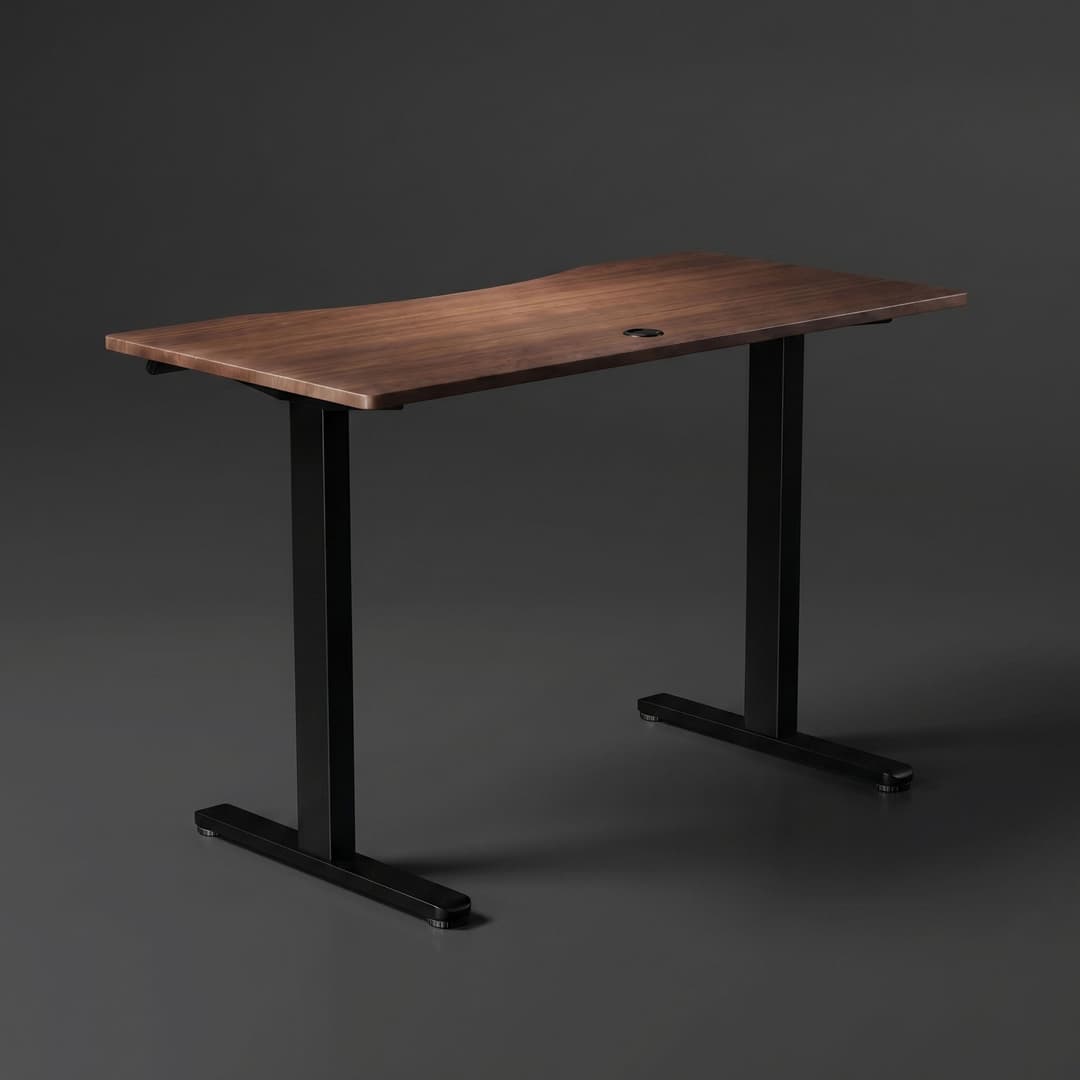
For full disclosure, we make one. The Vival Desk is a dual-motor electric standing desk: a 120 x 60 cm matte walnut-finish top (laminate on an engineered-wood core, said plainly) on a reinforced metal frame, rising 72 to 120 cm, rated to 100 kg, with three one-touch memory presets and a digital display. It is S$289 with code VIVAL60 (list S$349), all-in with free Singapore delivery, no GST, paid by PayNow or card. It is designed in Singapore by Esmond Solutions Pte. Ltd., and it carries a 1-year warranty on top of your statutory rights. It is one honest option in the middle of the market; weigh it against the checklist above, not against our say-so.
Quick answers
What is the best size standing desk for an HDB or BTO flat? For most Singapore flats, 120 x 60 cm is the practical sweet spot: wide enough to work on, shallow enough to leave the room open. Measure about 1.2 m of wall and 60 cm of depth before buying.
Is a dual-motor standing desk worth it over single-motor or manual? If you will change height daily, yes; dual-motor desks are smoother, quieter and steadier, so you actually keep alternating. If you rarely adjust, a manual desk is honest value.
What height range should a standing desk have? Around 72 to 120 cm covers most people sitting to standing. Set it so your elbows are near 90 degrees and wrists flat. Taller and shorter users should check the maximum and minimum respectively.
How much should a standing desk cost in Singapore? Budget flat-pack desks start low and dedicated ergonomic brands run into four figures. A mid-market dual-motor desk with a real warranty and free delivery is the value zone for most buyers; the Vival Desk sits here at S$289 with code VIVAL60 (list S$349).
Do standing desks come assembled? Most are self-assembly and take under an hour with a few bolts. Check whether paid assembly is offered if you would prefer not to build it.
Sources and standards referenced: US OSHA computer-workstation guidance (neutral posture); Singapore Consumer Protection (Fair Trading) Act and Lemon Law (statutory rights on faulty goods). This guide is general information, not medical or legal advice.