Work From Home Desk Setup, First Flat
A work from home desk setup for a first flat should feel calm, not crowded. Choosing the corner, the surface, and the room you will grow into.
Start with how you want to feel, not what you buy
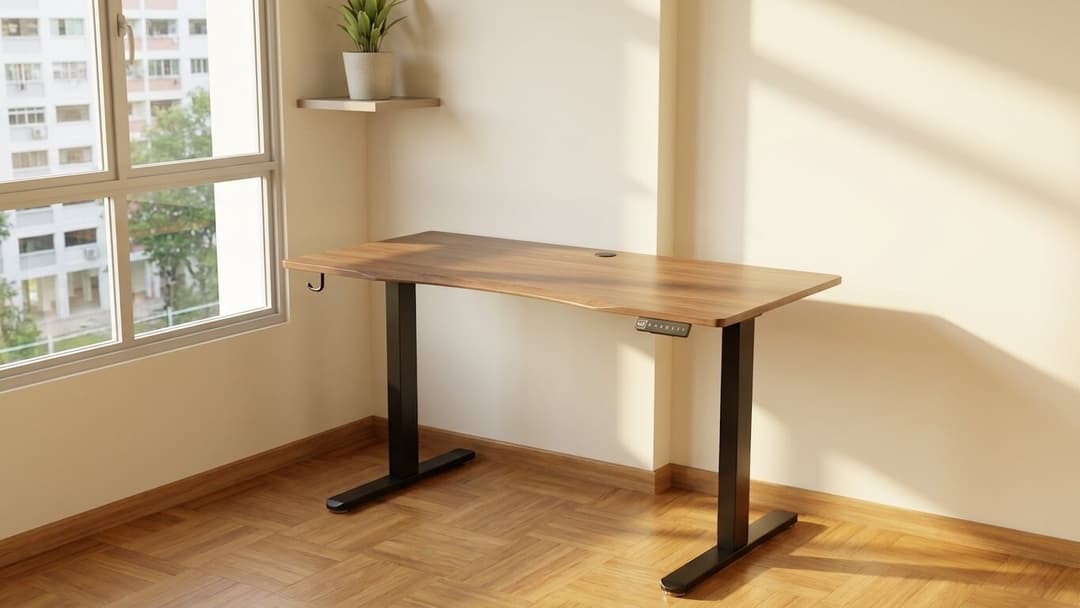
A first home workspace is one of the few corners of a new flat you get to design entirely around yourself. No office layout to inherit. No one else's idea of where the desk should go. Before you measure anything or add a single item to a cart, sit in the empty room and notice the light. Where does the morning sun land. Which wall stays quiet when the rest of the flat is busy. That feeling, calm, clear, yours, is the brief. Everything after it is just choosing what serves it.
Most first flats in Singapore are compact, and that is not a problem to solve so much as a fact to design with. A small room rewards restraint. One good surface, a chair that holds your back, and clear space to think will always beat a crowded room full of things you bought to fill it.
Pick the corner before the furniture
The spot matters more than the gear. Look for three things.
Light
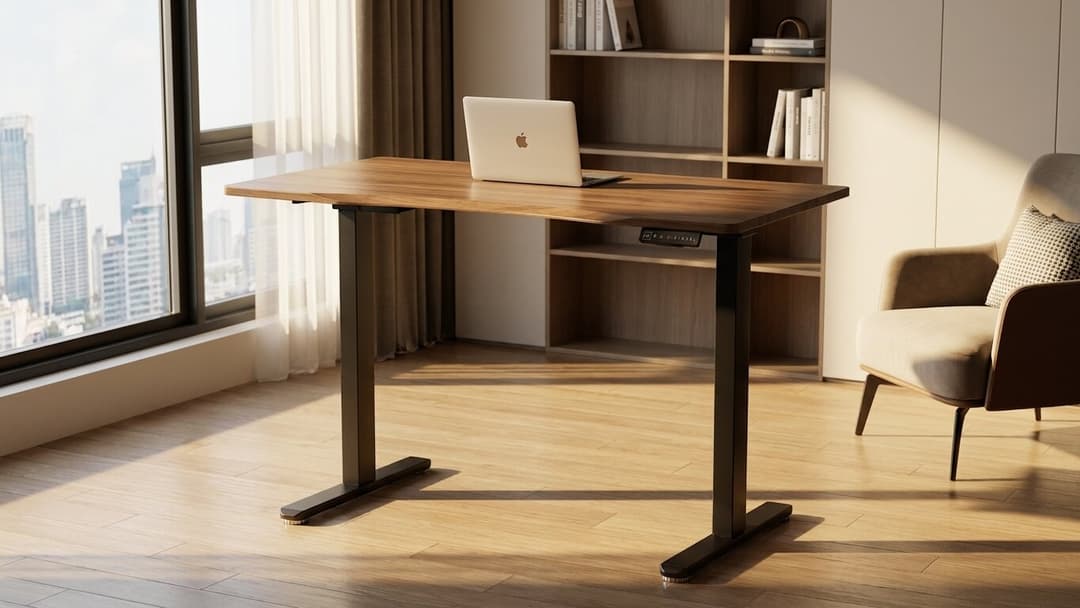
A window on the side rather than directly in front keeps glare off your screen through the day. If your only option faces the window, a sheer curtain softens the worst of it.
Quiet
Pick the wall furthest from the kitchen and the front door. In a BTO or resale flat, the bedroom corner is often calmer than the living room, even if it feels less obvious.
Power
Workspaces drift toward whatever wall has a socket. Find the outlet first, then plan the desk around it, so you are not running an extension cord across a walkway you use every day.
Once the corner is settled, the rest gets simpler. You are no longer furnishing a whole room. You are setting up one good station.
Build around one surface that adapts
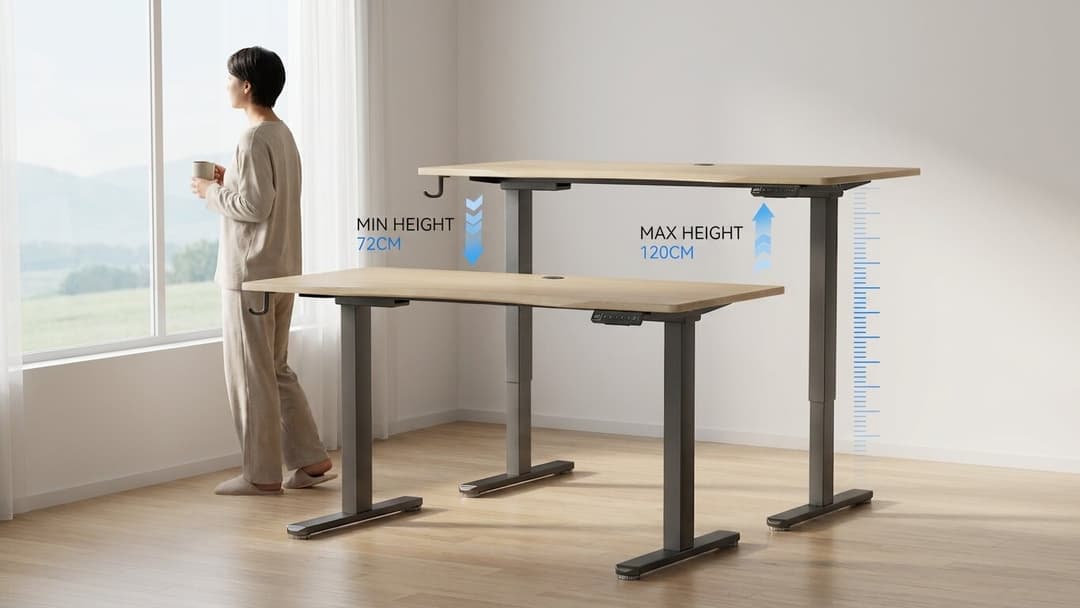
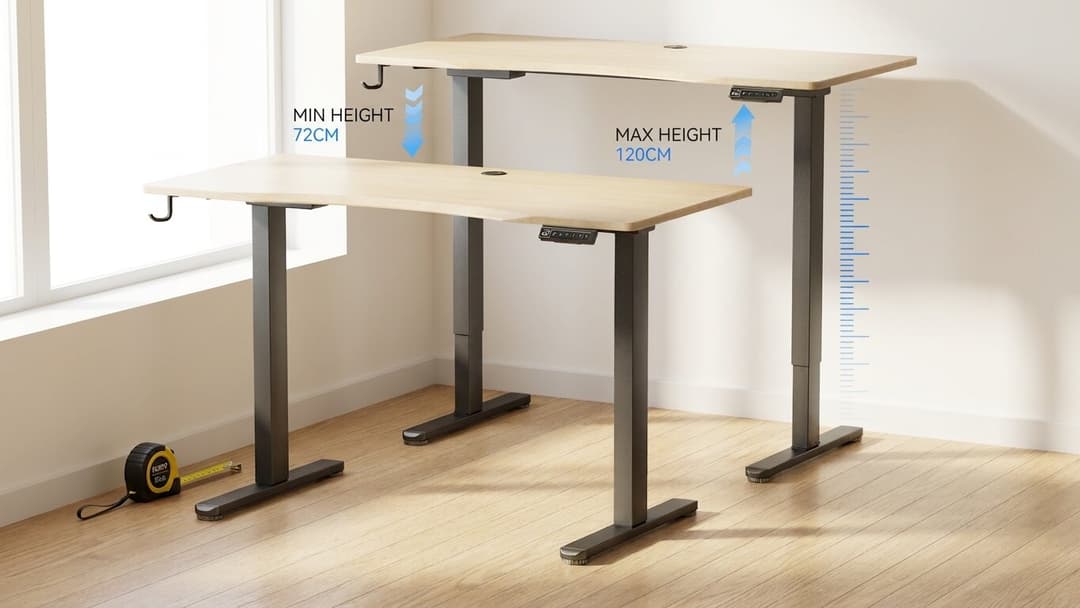
In a first flat, the desk earns its place by doing more than one thing. The room is likely your study, your video-call backdrop, and on some evenings your hobby table too. A surface that only suits one of those wastes space you do not have.
This is where the case for sitting and standing gets practical rather than aspirational. The World Health Organization recommends that adults limit their sedentary time and replace some of it with activity of any intensity. A sit-stand setup makes that easy to act on. You change posture without leaving your chair behind or breaking your focus. The point is not that a desk fixes anything on its own. The point is that moving more across a day is easier when your setup lets you do it in a second, not when it asks you to rearrange the room.
A height-adjustable desk also future-proofs the corner. Flats change. You might share the room later, or shift the desk to another wall, or swap the chair. A surface set to your exact height, with memory presets so you never re-measure, travels with you through all of that.
If you want the step by step version for a study room specifically, we wrote a full guide on how to set up a standing desk in a BTO study.
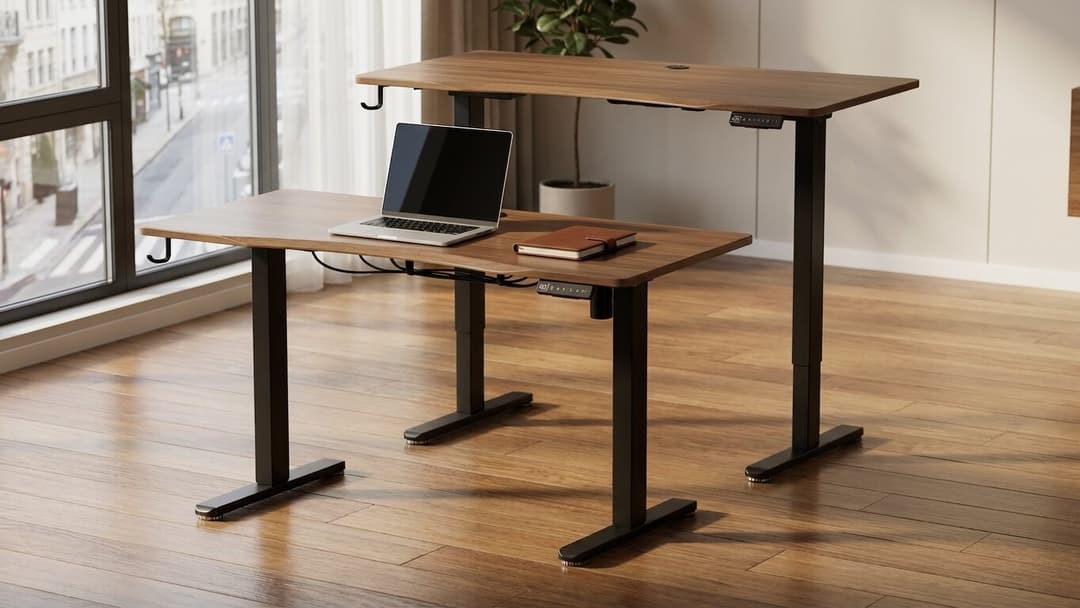
Keep the surface clear, keep the mind clear
A first workspace fails quietly. It fills up. The mug, the cables, the parcel you meant to open. Within a month the desk you were proud of is a shelf you can't work at.
Two habits keep it honest.
First, give every object a home off the surface. A small drawer unit or a wall shelf does more for focus than any gadget. The desk is for the one thing you are doing now.
Second, route your cables once and route them well. Run them along a single edge, clip them under the top, and bring power up from one point. With a sit-stand desk this matters a little more, because the surface moves, so leave enough slack and tidy what's left. It takes twenty minutes and you feel it every day after.
Let the room grow with you
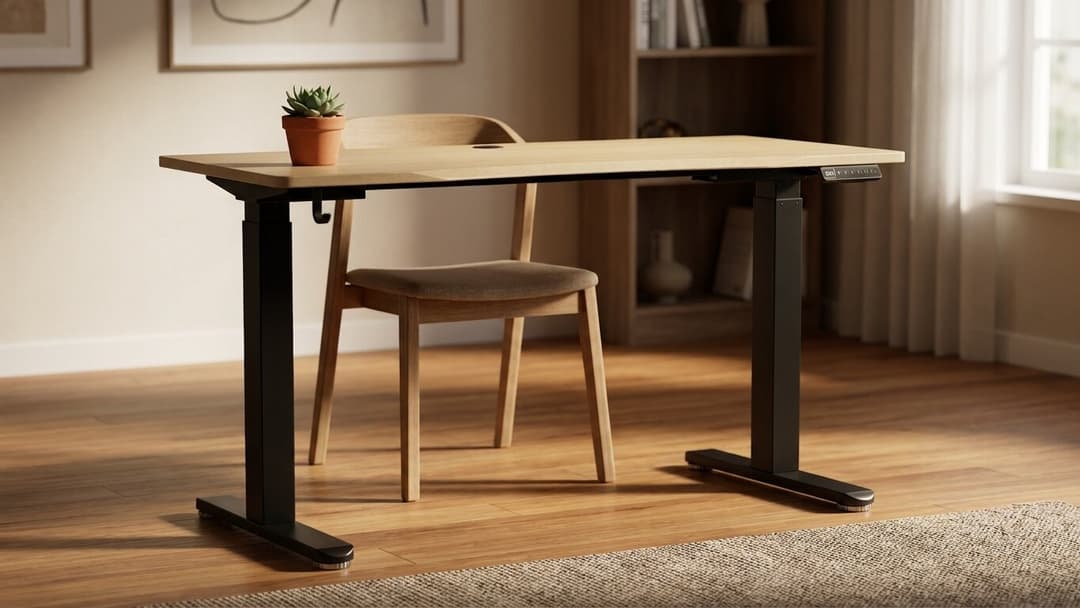
You do not need the finished version on day one. A first home workspace is allowed to start small and earn its additions. Get the corner right. Get one good surface that adjusts to you. Add the chair, the light, the shelf as you learn how you actually work in the space, not how you imagined you would.
That is the whole approach. Choose the feeling, find the corner, build around one surface that moves with you, and keep it clear enough to think.
When you are ready to choose that surface, see how we approach the first-flat workspace, and the Vival Desk that is built to grow with the room.