How to Choose a Study Table That Fits an HDB Room
Choosing a study table for a Singapore home: how to size it to the room, judge the material honestly, and know when an adjustable one is worth it.
A good desk starts with the wall it will sit against, not the shortlist you saved on your phone. In a Singapore flat the room is the hard limit, and every other decision follows from it. Get the order right and the choice becomes simple: the space tells you the footprint, your hours tell you whether the height should move, and the material tells you whether the price is honest.
This is a short, practical way to work through those decisions, in the order that saves you from a return.
Start with the room, not the table
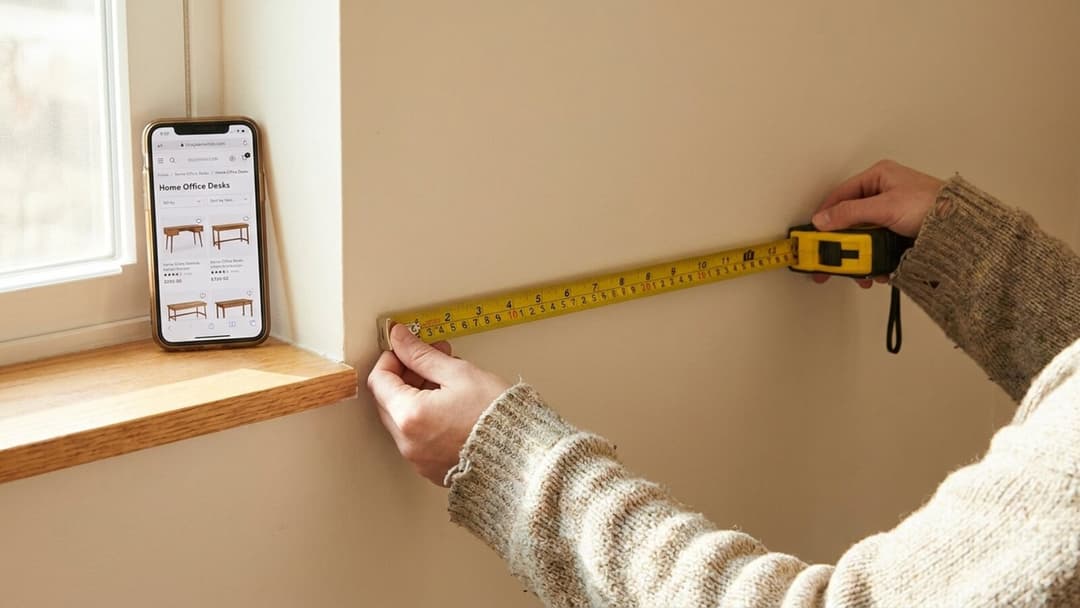
Measure before you browse. Mark the wall or the nook where the desk will live, then subtract the space a chair needs to pull out and the room a person needs to walk past. What is left is the widest top you can actually use, and it is almost always narrower than the one you fell for online.
For most bedrooms and study nooks here, a top around 120 by 60 cm is the quiet sweet spot. It holds a laptop or a single or dual monitor with room to write beside it, and it still leaves the floor open. We make the case for that exact size in why a 120 by 60 desk fits an HDB room, because a bigger surface rarely earns the metre it steals from a small room.
Depth matters as much as width. Too shallow and your screen sits in your face; around 60 cm lets a monitor breathe at arm's length. Write your two numbers down, the maximum width and the depth, and treat them as the filter every table has to pass before anything else about it counts.
Fixed height or adjustable?
A fixed table is set once, at the factory, for an average body. The Canadian Centre for Occupational Health and Safety guidance describes a comfortable seated posture as elbows bent between 90 and 120 degrees with the forearms roughly parallel to the floor, work materials at or just below elbow height, and the feet resting flat on the floor or on a footrest. A fixed desk can only meet that for a body close to the average it was built for. If you match it, share the desk with no one, and sit for short stretches, a fixed height is perfectly fine and usually cheaper.
The moment two people share the desk, or a child grows into it, or you work long enough that sitting still starts to ache, one fixed number stops fitting everyone. That is where an adjustable range earns its place. A desk that travels, for example from 72 to 120 cm, sets to a short frame and a tall one, to a seated writing height and a standing one, without a single compromise baked in.

The useful test is honest hours. If you or anyone in the home will spend real time at this desk, buy the movement. If it is an occasional homework spot, you can skip it. Our fuller standing desk height guide walks through setting the number to your own elbow rather than to a chart.
Read the material honestly
This is where furniture listings get slippery. "Wood" can mean anything from a solid plank to a printed film, and the word that sells is rarely the word that is true. So read the material description slowly.
The Vival Desk top is a walnut finish: a durable laminate, meaning a printed surface layer bonded onto the board, over an engineered-wood core. It is matte and low-glare, and we describe it in exactly those words. A surface layer bonded to a board is a different thing, at a different price, from a plank milled from a single tree, so we name ours for what it is and let a shopper judge with open eyes. If a listing leans on the word "wood" at a price that seems too kind, ask what the core actually is. We put the full comparison in plain terms in engineered wood versus a solid wood desk.
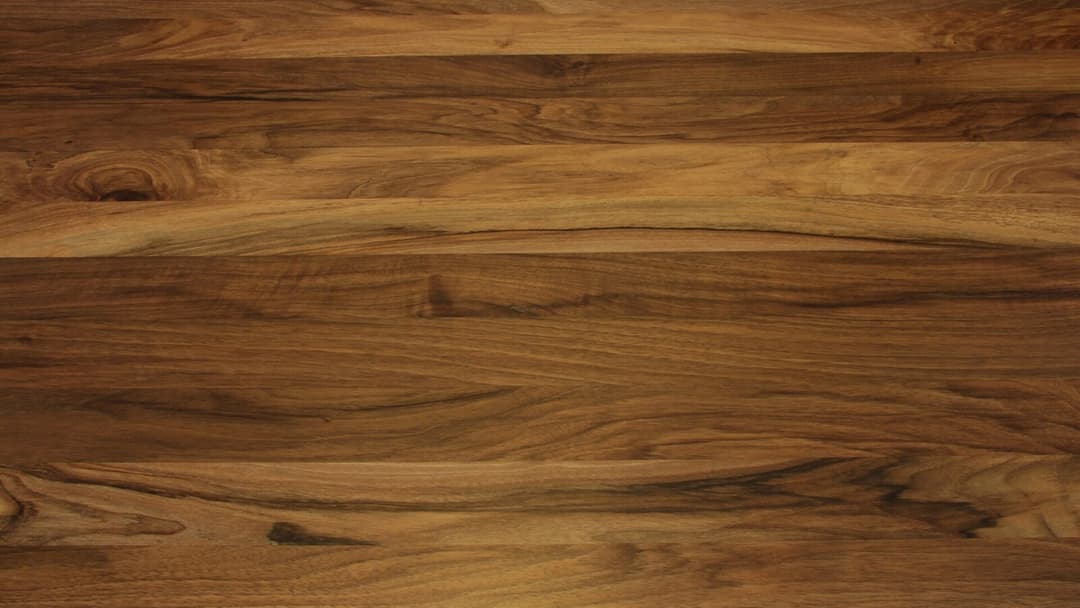
*Photo: Martin Lorenz, CC BY-SA 3.0, via Wikimedia Commons*

Engineered wood earns its place on its own merits. A quality surface layer over a stable core resists Singapore humidity better than many solid tops, holds a straight edge, and keeps its weight sane for a top that has to move. What you are owed is the truth about what you are buying, stated in the words that match the object.
Stability, storage and cables
A desk that wobbles when you type is a desk you stop using. Two things settle stability: the frame and the load rating. A reinforced metal frame with two-stage telescoping legs, meaning each leg slides through two sections as it moves, holds a line far better than a light flat-pack skeleton, and a clear rating tells you what the surface is built to carry. The Vival Desk is rated to hold up to 100 kg on top, which covers a heavy monitor arm, a mechanical keyboard, books and the lean of two elbows without complaint.
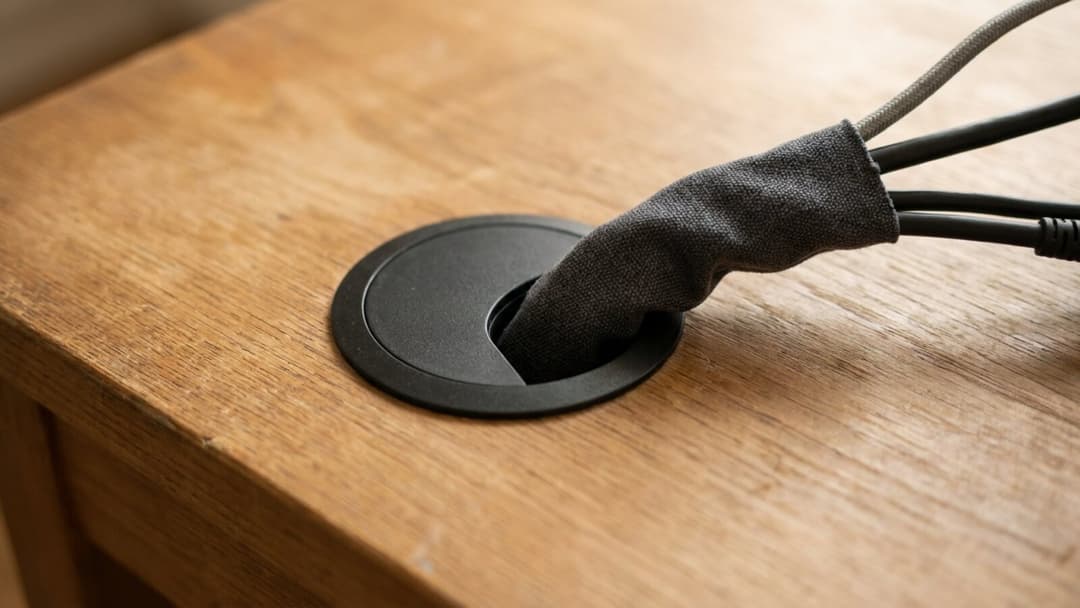
Storage is a personal call. Drawers keep a room tidy but eat legroom and add weight; open shelves nearby often serve better and keep the desk light. Cables are the detail most guides skip. Look for a routing channel and a grommet, the ringed hole in the top that cables pass through, so a laptop charger, a monitor cable and a lamp lead run to one point instead of pooling around your feet. On a desk that moves, tidy cabling is what stops a cable snagging as the height changes.
Delivery, assembly and warranty in Singapore
The best desk is still a bad buy if getting it home is a saga. Ask three questions before you pay: how it arrives, how long it takes to build, and what happens if it turns up damaged.
On assembly, we can speak from our own records. Our published FAQ states that the Vival Desk arrives flat-packed and most people finish assembling it in about 30 to 45 minutes. One person can do it, though the large top is easier to flip and finish with a second pair of hands. That is the honest figure, in place of a marketing promise.
On support, read the warranty first. Our warranty page states that if a desk arrives damaged or non-conforming, including the top, the frame or any part, we put it right at no cost and send a full replacement set if needed, in place of a single spare component. Delivery across Singapore is free and handled by an appointed partner who arranges a time with you. A guide that skips all of this leaves out the part that decides whether you regret the purchase.
How the Vival Desk answers the checklist
Run the same checklist we started with, and one desk lines up against all of it. The footprint is 120 by 60 cm, sized for a real room. The height moves from 72 to 120 cm on dual motors, with three one-touch memory presets and a lit readout that shows the exact height as it travels, so a shared desk fits everyone who uses it. The top is an honest walnut finish, a laminate over an engineered-wood core. The frame is reinforced metal rated to 100 kg, and the cabling routes to one point.
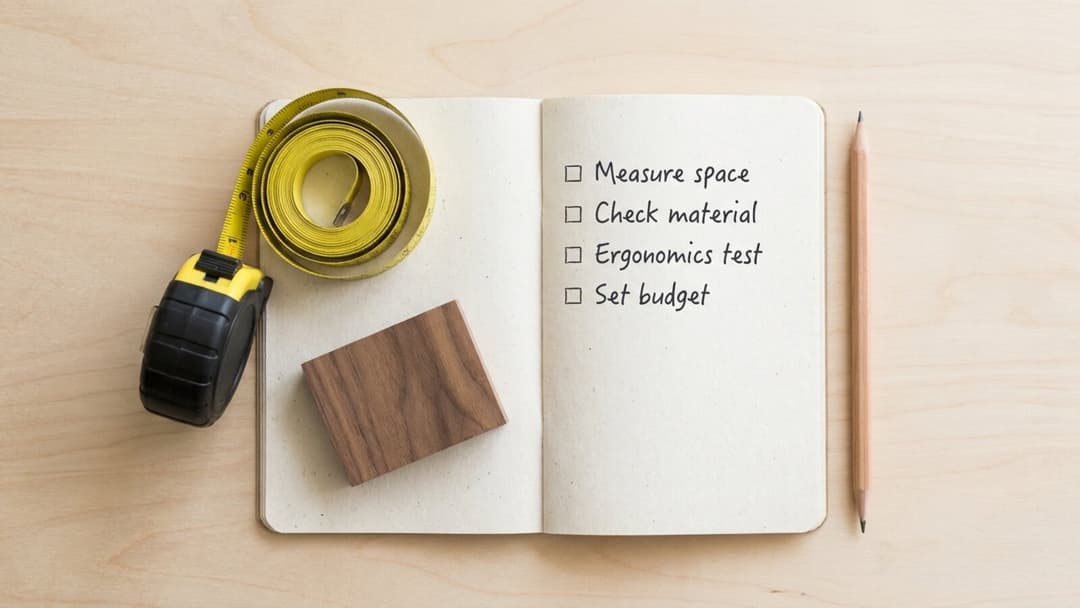
If that matches the desk your room is asking for, read the full specification and buy it on the Vival Desk product page. S$289 with code VIVAL60 (list S$349) If you would rather compare across what is available locally first, start with the study tables we stock in Singapore and come back to this checklist for each one. The decision is easier than the shortlist makes it feel: measure the room, match the height to your hours, and read the material in the words that are actually true.