How to Choose a Foldable Desk for a Small Space
Choosing a foldable or wall-mounted desk for a small room: how to measure your space, check load and stability, and know when a full-size desk fits better.
A small room sets the terms. Before a desk is a style or a price, it is an object that has to fit against a wall, clear a door as it swings, and leave you somewhere to stand. Start there and the choice gets honest.
A foldable or wall-mounted desk is one answer to a tight room, because it gives the floor back when you are not working. Whether it is the right answer for you depends on a handful of facts you can check, and on a measurement you take before you shop.
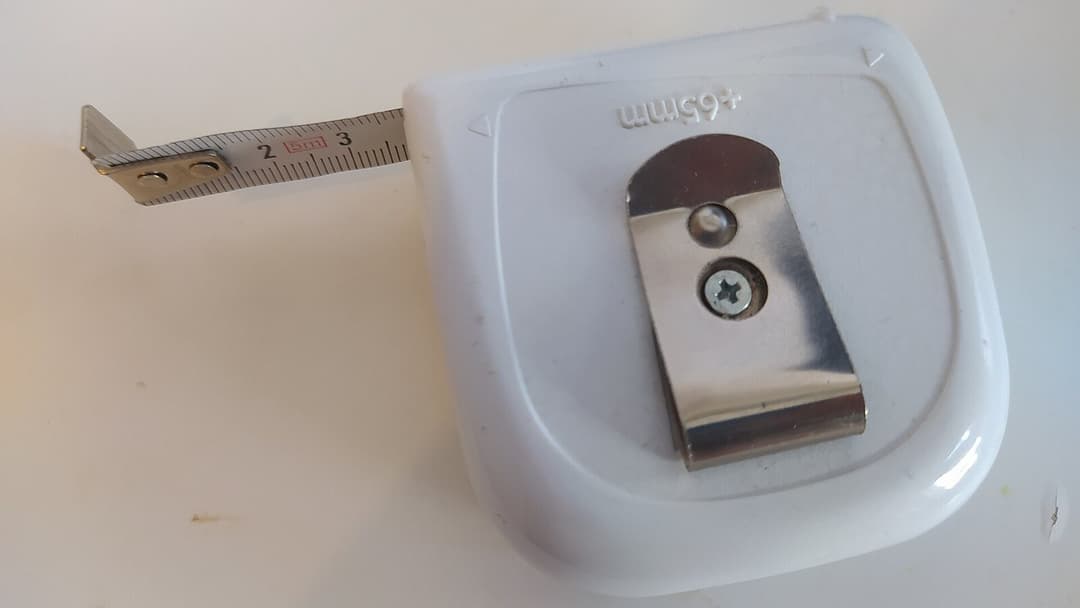

Measure the wall before you shop
Measure before you browse. Mark the stretch of wall where the desk will live, then watch what moves around it: the arc a door sweeps as it opens, the sill and reveal of a window, and where the power points sit. A desk that blocks a door or strands you from a plug is the wrong desk at any price.
Write down two numbers: the width you can give the desk, and the depth the wall allows. Those are the filter every desk has to pass before anything else about it counts. We make the case for how a desk earns its footprint in a bedroom here in why a 120 by 60 desk fits an HDB room, and the same measuring habit runs through our guide to choosing a study table for an HDB room.
What a folding or wall-mounted desk gives back, and what it costs
The appeal is simple. A wall-mounted drop-leaf desk folds flat against the wall when it is not in use and returns the floor to the room. IKEA's NORBERG wall-mounted drop-leaf table, for example, is 74 by 60 cm and folds away to save space when it is not used; packed, it is a slab of 47 by 6 by 77 cm weighing 9.05 kg. That thinness is the whole point of the format, and it is what a crowded bedroom gains when it gives up a permanent desk.
The trade is surface and storage. That leaf holds a laptop and a notebook, not a laptop, a second screen and room to write beside them. There are no drawers, and little can stay on the top once it folds down. For a laptop and light tasks that is plenty. For long days with a monitor it starts to pinch.

The facts to check on any folding or wall-mounted desk
Judge one of these desks on what you can measure, not on the photograph. Three things decide whether it is worth mounting.
Start with load. Ask what the top is rated to hold. Some makers print the figure and some do not. IKEA's NORBERG page, for instance, lists no maximum load for items placed on the table. A desk with no stated load is a desk you are guessing about, so treat a clear rating in kilograms as the baseline before you trust a leaf with a screen.
Then the mechanism. A drop-leaf or fold-down top lives on a hinge and a bracket, and the bracket is what carries your weight when the leaf is open. Look for one that locks positively when open and folds without a fight, in a metal the maker is willing to name.
Last, what it needs from the wall. The NORBERG table mounts on a steel plate and is meant to be fixed so the top edge sits about 74 cm high, for indoor use. That means real screws into a real wall, which is the next thing to settle before you buy anything.
Before you drill into an HDB wall
Mounting a desk means drilling into a wall, and in an HDB flat what you may do to a wall is governed by HDB's rules rather than left to you. A load-bearing wall and a light partition are not the same wall, and some changes to a flat need HDB's approval. Check HDB's own renovation guidance for your flat before you drill or mount anything, rather than assuming a particular fixing is allowed. If the answer is uncertain, a freestanding folding desk sidesteps the question entirely.
What a small, shallow desk costs you in comfort
A shallow top saves space partly by moving the screen towards you, and that has a cost you can measure. CCOHS advises placing a monitor about an arm's length from your eyes, roughly 15 degrees below your line of sight. A shallow leaf with a monitor set on it can leave you closer than that, and the screen sitting lower than it should.
Legroom is the other squeeze. OSHA puts the clearance for your legs under a desktop at 20 to 28 inches, which is 50 to 72 cm, high. A fold-down top with a bracket or a storage box beneath it can cut into that space, so look at what sits under the leaf before you commit. For setting any desk to your own body rather than to a chart, our standing desk height guide works through it.

When a full-size desk still fits
A folding desk is the right call when the room genuinely cannot keep a desk standing. When it can, a full-size desk you never have to fold out is usually the better daily tool, and it need not dominate a small room.
A top of 120 by 60 cm holds a screen at arm's length with space to write beside it, and still leaves the floor open in most bedrooms here. The Vival Desk is that size, it adjusts from 72 to 120 cm on dual motors, it is rated to carry up to 100 kg on a reinforced metal frame, and it has an engineered-wood top with a matte, low-glare walnut finish, meaning a printed surface layer bonded to a stable core rather than a milled plank. Three one-touch presets return it to a seated or a standing height.
Getting it home is straightforward. Our published FAQ states the desk arrives flat-packed and most people set it up in about 30 to 45 minutes, and that delivery is free across Singapore. If it turns up damaged, our warranty page states we put it right at no cost and send a full replacement set where needed.
Read the full specification and buy it on the Vival Desk product page. S$289 with code VIVAL60 (list S$349) If you would rather see what is available locally first, start with the study tables we stock in Singapore. Measure the wall, check the load and the mechanism, and let the room decide between a desk that folds and one that simply fits.