Footrest Under a Desk: When One Helps, What to Check
A footrest helps only when your feet cannot sit flat on the floor. Here is when one earns its place, and what to check before you buy.

A small padded platform under the desk is one of the cheapest things you can add to a workspace, and one of the easiest to buy without needing. The honest answer to whether you need one is narrow: a footrest earns its place only when your feet do not rest flat on the floor after the chair is set for the desk. Everything else below is how to tell, and what to check if the answer turns out to be yes.
When a footrest actually helps
Start with the chair, not the footrest. Set the seat so your forearms sit roughly level with the desk and your wrists stay straight. Then look down. If your feet are planted and the backs of your knees are not pressed into the seat edge, you are done, and a footrest would only get in the way.
The platform matters when raising the chair to meet a fixed desk leaves your feet dangling or on tiptoe. OSHA's chair guidance puts the trigger plainly: if the seat cannot be lowered, for example because it would make the keyboard or monitor too high, use a footrest to provide stable support for the feet. The same page sets the target it restores, that the chair height is right when the whole sole of the foot can rest on the floor with the back of the knee slightly higher than the seat.
So the order is: lower the desk if you can, raise the chair if you cannot, and add a footrest only when raising the chair lifts your feet off the floor. It is the second fix, not the first.
What the ergonomics guidance says about your feet
A footrest is there to hold one shape. In a neutral sitting position, CCOHS describes the soles of the feet at a 90 degree angle with the lower legs, the thighs approximately horizontal and the lower legs vertical, with the feet resting on the floor or on a footrest. OSHA's seated-posture page agrees on the geometry: thighs and hips generally parallel to the floor, knees about the same height as the hips, and feet fully supported by the floor or a footrest if the desk height is not adjustable.
Read those two sources together and the role of the footrest is clear. It is a substitute for a floor that is now too far away, used specifically when the desk cannot come down to you. The only part that matters here is whether your legs hold that shape, and if they already do without one, the guidance does not ask you to add anything.
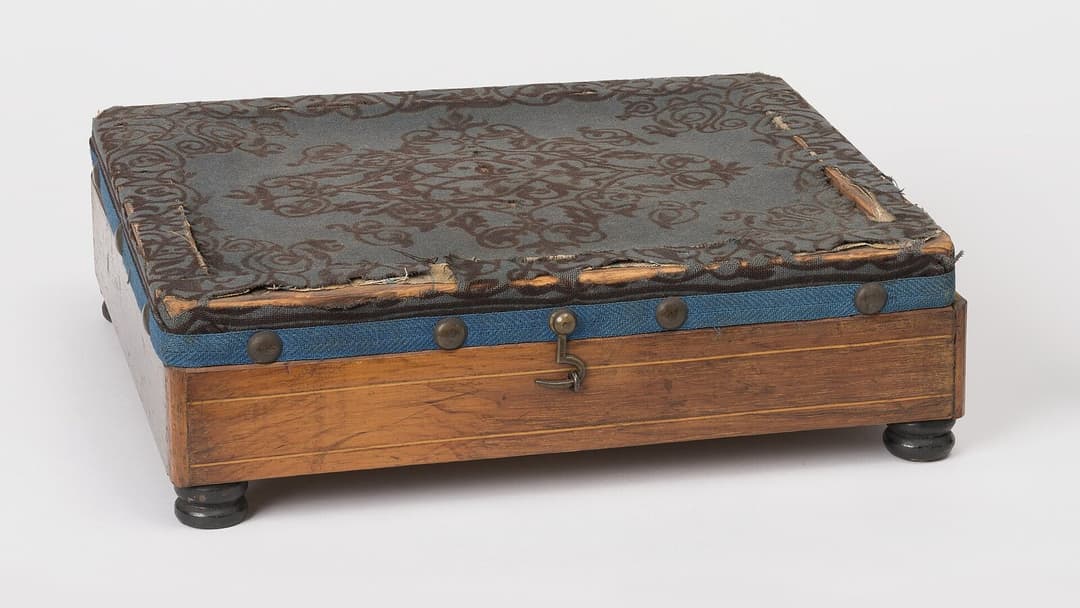

What to check before you buy a footrest
We have not tested footrests, and nothing below is a product recommendation. These are the checkable features the primary guidance points to, the things you can verify against a maker's own spec page or with a tape measure.
- Adjustable height. A footrest has one job: to fill the exact gap between your feet and the floor once the chair is set. CCOHS says the footrest should be adjustable and support both feet, kept flat and firm on it. A fixed block that happens not to match your gap does the opposite of the job.
- Wide enough for both feet. Both feet need to sit on it squarely, not balance on an edge. Check the stated width against the natural distance between your own feet when you sit relaxed.
- A surface that holds. Feet should stay flat and firm, so a grippy top and a stable base matter more than padding.
- A tilt, if it offers one. An angled top lets the ankle relax rather than forcing the toes up. Treat it as a comfort option, not a requirement the guidance makes.
To size one, sit in your correctly set chair and measure the gap from the sole of your foot to the floor. That distance is the height the footrest has to reach. A platform that cannot be set to it is the wrong platform, whatever the reviews say.
What an adjustable desk does and does not change
A desk that lowers helps, but for most people it does not remove the footrest. Our desk-height calculator is blunt about it: for most people the ideal seated desk height is below the Vival Desk's 72 cm minimum, so you raise the chair and add a footrest. It calls that standard ergonomic practice, not a shortcoming to hide.
The numbers show why. The calculator's chart puts the ideal seated desk height at 59 to 61 cm for someone 150 cm tall, 66 to 70 cm at 170 cm, and 68 to 72 cm at 175 cm. With the top at its lowest of 72 cm, most people up to around 175 cm still raise the chair past the point where their feet sit flat, which is exactly when a footrest earns its place. Taller people, around 180 cm, whose seated figure is 70 to 74 cm, can meet the desk without raising the chair that far and may not need one at all.
Every height the calculator returns is cross-checked against the same OSHA and CCOHS guidance quoted above, so the footrest advice rests on primary sources rather than on a sale.
If you are still choosing a desk, it is worth running your own numbers first. Our guide to setting your standing desk height walks through the seated and standing figures, and the piece on adjusting your desk through the day covers moving between them.
Setting it up once it arrives
If you do need one, setup is short. Sit with the chair at its correct height, slide the footrest under, and raise it until your feet sit flat and your thighs stay roughly level, matching the shape the guidance describes. Both feet should rest fully on the surface with no pressure building behind the knees.
Leave room to shift. A footrest is a resting point, not a clamp, so set it where your feet can still move and change position. And treat the chair and desk as the main adjustment: get those right first, as the guide to setting up a chair and desk together lays out, and the footrest becomes the small final fix it is meant to be.