The Pomodoro Technique, and How to Use It at a Desk
What the Pomodoro Technique is, from Francesco Cirillo's own account, plus what research on work breaks actually found, and how to run it at a sit-stand desk.
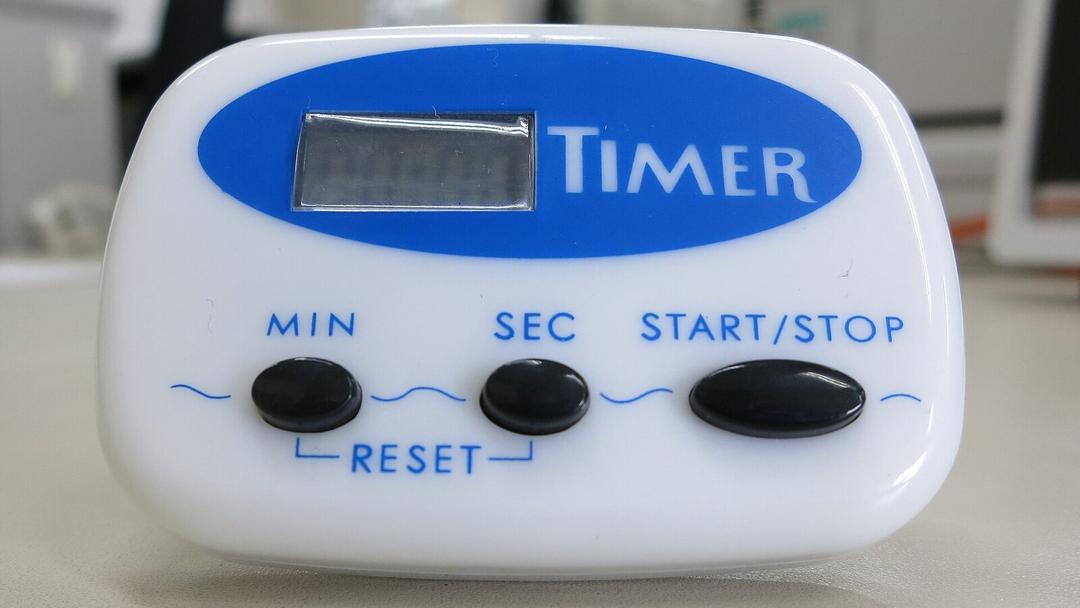

The idea is small enough to explain in a breath. You pick one task, set a timer for 25 minutes, and work on nothing else until it rings. Then you take a short break of about five minutes. After four of these rounds you take a longer break, usually 20 to 30 minutes, and start again. That is the whole of it, and the timer is doing most of the work by turning a vague afternoon into a short, finishable block.
Does it work? Honestly, the evidence on short work breaks is small and mixed, and we will go through exactly what it does and does not show below. The method is worth a try because it is free and takes a day to test, not because science has settled it.
This is general information, not medical advice. If sitting or working at a screen leaves you with pain that will not settle, see a doctor or physiotherapist.
The short version, and one honest note
The Pomodoro Technique is a way of slicing work into fixed intervals of focus and rest. One interval, called a pomodoro, is 25 minutes of single-tasking; the short break that follows is for standing up, looking away, and letting your attention reset. The point of the timer is to make a clear edge where work usually blurs. You are not deciding minute by minute whether to keep going. You already decided, and the timer holds you to it.
The honest note is this: the structure is a tool for your attention, not a proven productivity machine. People who like it tend to like that it makes starting easier and distraction harder. If 25 minutes does not suit the kind of work you do, the interval is yours to change, and nothing below depends on the number being exactly 25.
Where the technique came from
The method is not folklore. Francesco Cirillo developed the Pomodoro Technique in the late 1980s and named it after the tomato-shaped kitchen timer he used as a university student. Pomodoro is simply the Italian word for tomato, so the name is a direct nod to that small wind-up timer on his desk. He later set the rules down in a book, and the documented account of the technique traces both the origin and the fixed steps below.


Knowing the origin matters for one practical reason. The method was built around a physical timer you wind and watch, not a notification you can swipe away. That friction, the small ceremony of setting the dial, is part of why it works for the people it works for.
How one pomodoro works, step by step
The cycle is deliberately rigid, and the rigidity is the feature.
1. Choose one task. Not a list, one thing. 2. Set a timer for 25 minutes. 3. Work on that task only until the timer rings. 4. Take a short break of about five minutes. 5. After four pomodoros, take a longer break of 20 to 30 minutes, then begin again.
Two rules give the method its backbone. First, a pomodoro is indivisible: there is no half a pomodoro, and the clock does not pause for a quick glance at your phone. Second, if a pomodoro is interrupted, you handle it in one of two ways. Either the thing that interrupted you is recorded and postponed until the break, or that pomodoro is abandoned and started fresh later. That sounds strict, and it is meant to be. The whole value is in protecting one unbroken block of attention, so the rule that guards it cannot be soft.


The practical trick most people land on is the one in the picture above: the phone goes face down and out of reach, and the task gets written down before the timer starts. A pomodoro is easier to protect when the main thing that would break it is already parked.
What the research on breaks actually shows
Here is where a careful guide should slow down, because most pages on this topic promise more than the studies deliver. The strongest single piece of evidence is a 2022 systematic review and meta-analysis published in PLOS ONE, which pooled 22 study samples from 19 publications, covering 2,335 participants, on micro-breaks of no more than 10 minutes.
What it found was modest and specific. Micro-breaks were linked to a small but statistically significant lift in vigour (an effect size of d = 0.36) and a small drop in fatigue (d = 0.35). In other words, short breaks helped people feel better. On actual performance, though, the pooled effect was not statistically significant (d = 0.16). A follow-up analysis did find that longer breaks were linked to a greater boost in performance than very short ones, which is a hint rather than a verdict.
Two limits keep this honest. The authors noted the number of studies was modest, which narrowed what they could test, and the well-being results leaned on people reporting how they felt, which is open to bias. So the fair summary is not "breaks make you more productive." It is closer to: short breaks were linked to feeling more energetic and less tired, the effect on output has not been clearly shown, and longer breaks may do more for performance than micro ones. The Pomodoro Technique is one tidy way to build such breaks into a day; that is the connection, not a claim that it has been tested and proven.
Running it at a sit-stand desk
A break is more useful if you actually leave the chair for it, and this is where the desk you sit at earns its place. Instead of spending your five minutes slumped in the same seat scrolling, use the break to change position: stand up, look at something far away to rest your eyes, get a glass of water, and walk the length of the room.


If your desk raises and lowers, the break between pomodoros is a natural moment to switch between sitting and standing, so your working position changes with the clock rather than staying fixed for hours. A desk with saved height presets makes that a single press, which removes the small friction that otherwise stops people bothering. We keep the detail out of this page on purpose: our standing desk routine that lasts covers how often to switch and how to make it a habit, our guide to work desk exercises and movement breaks lists gentle stretches with their hold times, and our note on how to sit at a desk correctly covers the angles. Pair any of those with the break, and the Pomodoro timer becomes a nudge to move, not just to rest.
How to start tomorrow
You do not need an app or a subscription to begin.
- Pick one task tonight and write it on paper.
- Tomorrow, set any timer for 25 minutes and work on only that task until it rings.
- When it does, stand up and take five minutes away from the screen.
- Do four rounds, then take a longer break of 20 to 30 minutes.
Adjust the numbers to the work. Deep, difficult tasks may suit a longer block before the break; shallow admin may suit shorter ones. The research hint that longer breaks can help performance is worth remembering if your five-minute breaks never seem to be enough. Keep what helps, drop what does not, and do not treat the clock as a rule you have failed if a good run of focus overshoots it. A tidy desk layout, with the task in front of you and the distractions out of reach, does as much for a pomodoro as the timer does.
Where the Vival Desk fits in
If you decide you want to sit and stand across those break points, a height-adjustable desk makes it effortless. The Vival Desk is a dual-motor sit-stand desk that moves from 72 to 120 cm and holds up to 100 kg, with three one-touch presets and a lit readout that shows the exact height as it moves. Save one height for sitting and one for standing, and each break is a single press away from a change of position.
The practical parts are easy too. Most people put the whole desk together in about 30 to 45 minutes, so it can be running on the same evening it arrives, ready for the first pomodoro. Every Vival Desk carries a one-year warranty against manufacturing defects, and standard delivery anywhere in Singapore is free and usually lands within two to five working days. The method is free and the timer is whatever you already own; the desk is simply what makes moving during the breaks the path of least resistance.