Are Standing Desk Converters Worth It? When They Fit
A standing desk converter can be the right call or a costly compromise. When one earns its place over a full sit-stand desk, from makers' published specs.
You like your desk. You just want to stand at it sometimes. A converter promises exactly that: a platform that sits on the desk you already own and lifts your screen and keyboard to standing height, then drops back down when you want to sit. The real question is whether that promise holds once you put numbers to it, or whether the money is better spent replacing the desk.

The short answer
A converter earns its place in three cases. You have a desk you like or cannot replace, perhaps a rented one or a built-in worktop. You have little to spend right now. Or you want to try standing before you commit to a bigger buy. In those cases a riser that lifts your screen and keyboard is a sensible, reversible step.
A full sit-stand desk is the better call when you sit for most of the day, when you need the whole surface clear for two monitors and papers, or when you want your screen and your hands set at heights that suit you rather than at a fixed gap. We make and sell one of these desks, so take that as the bias it is, and read on for the facts both ways.
Whether standing through the day changes anything about your health is a separate question, and we keep it separate: our guide on what the research actually shows sticks to the studies rather than the sales copy. This page is about the kit and the fit.
What a desk converter actually is
A converter is a weighted platform that sits on your desk and rises on gas springs or a small motor. There are two common kinds. A manual gas-spring riser, like FlexiSpot's AlcoveRiser M7, lists a 33 lbs weight capacity and a separate keyboard tray rated 4.4 lbs, and you squeeze a lever and raise it by hand. A powered one, like Vari's VariDesk Pro Plus 36 Electric, holds up to 44 lb, lifts from 6 to 19.25 inches and runs on a motor. Its top is MDF (medium-density fibreboard, a board pressed from wood fibre), and it is tested to BIFMA (the American furniture testing standard), carries a 5 year warranty, and is ready once you attach the keyboard tray and the power cord.
One limitation sits inside the design. On most converters the keyboard shelf and the monitor platform ride up together by a fixed amount, so you cannot set your screen and your hands to independent heights. That matters because of how a work surface should sit. The Canadian Centre for Occupational Health and Safety places a work surface about 5 cm above elbow height for precision work and about 5 to 10 cm below elbow height for lighter work. On a converter, if the keyboard lands at the right height your screen may be a touch low, or the other way round. On a desk that moves as one piece, you set the whole surface and solve both at once. The same guidance notes that, where it is possible, a seat should be provided so a worker can do the same job either sitting or standing, which is the point of a riser in the first place.
A converter versus a full sit-stand desk
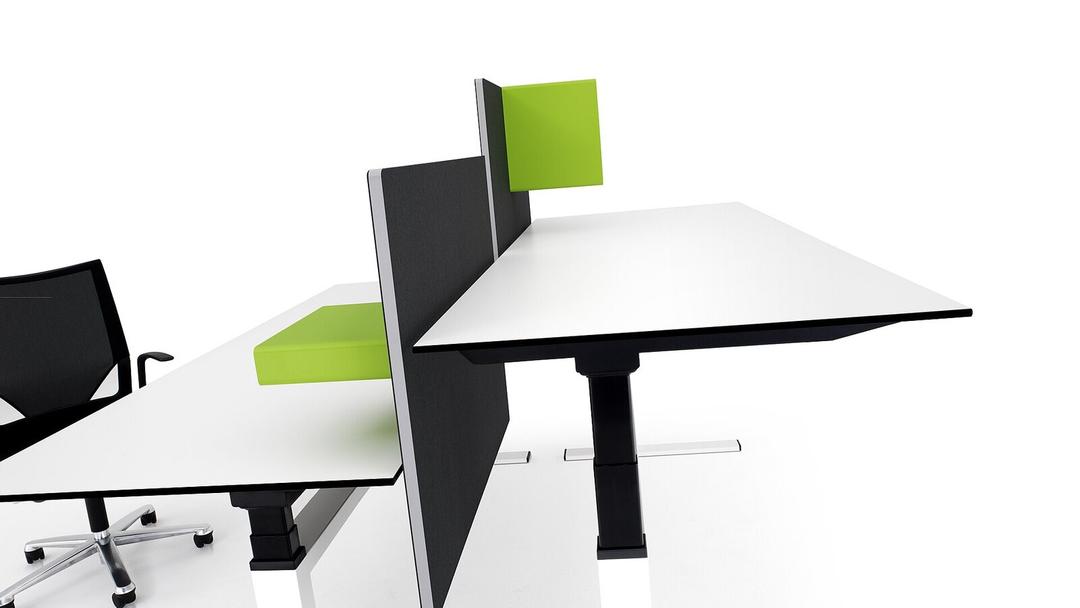

Start with surface. Vari's converter gives you a 36 inch wide platform and asks for 18 inches of clear desk depth beneath it, which is floor space you are borrowing back from a desk you already have. A full desk gives you the whole top instead. The Vival Desk, for comparison, is a 120 by 60 cm surface that is all usable, sitting or standing.
Then stability. A converter is only as steady as the desk under it, and it adds height and a little sway at the top of its travel. A full sit-stand frame carries its own load down to the floor. If you check a working height or a load figure before you buy, a full desk gives you one number to trust: our desk travels from 72 to 120 cm and is rated to hold up to 100 kg, so the surface meets your elbows at either posture rather than meeting them partway.
Assembly and delivery are closer than you might think. Vari's converter is ready once you fit the tray and the cord. A full desk takes longer, though not by much: the Vival Desk arrives flat and self-fits in 30 to 45 minutes, the frame, motors and controller fitting to the walnut top, and it ships free across Singapore and arrives in two to five working days.
Price is where converters earn their reputation, and it is fair. A good converter costs less than a good desk. But the gap is smaller than it looks once you reach the electric models. We read two brands' published Singapore prices on 10 October 2026 and found their six dual-motor standing desks priced between S$329 and S$1,760. A powered converter can cost as much as the lower end of that range, so the honest comparison is not a budget riser against an expensive desk, but a mid-priced riser against an entry desk that does more. S$289 with code VIVAL60 (list S$349)
Mats and walking pads: the other ways to stand
Standing is not the only way to get off your seat, and a riser is not the only tool. Two others are worth knowing.
An anti-fatigue mat is the least you can spend to make standing bearable. CCOHS says mats help on hard floors, but with a caution: too much cushioning from a thick foam-rubber mat can cause fatigue and add a tripping hazard, so a firm mat with tapered edges beats a soft, deep one. If you already have a desk at a good standing height, a mat may be all you need.
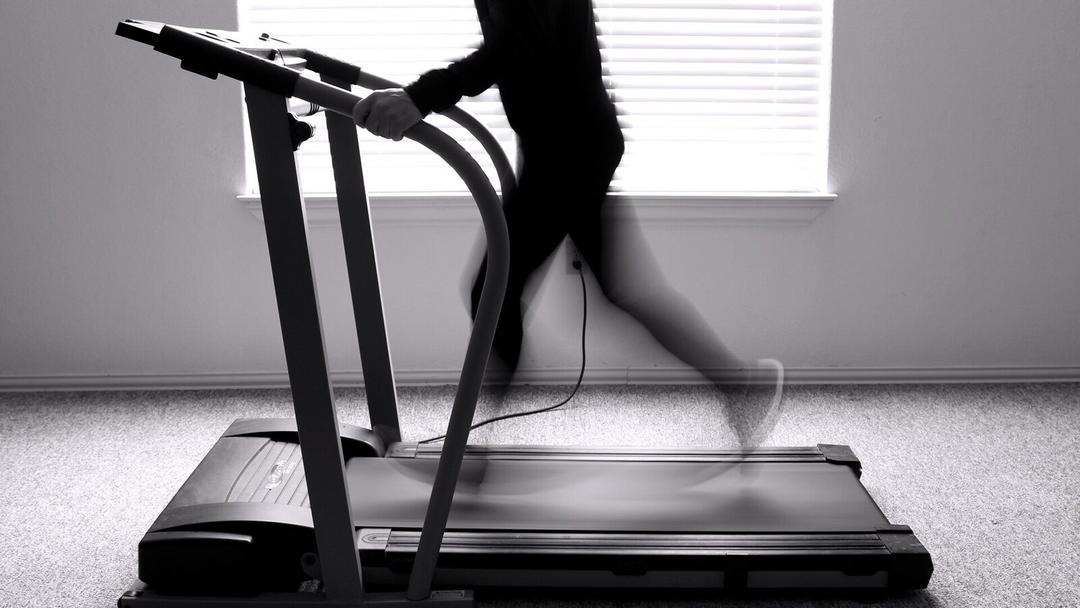
A walking pad goes further, letting you stroll slowly while you work. A Sharper Image under-desk walking pad lists a 265 lbs capacity, a 0.6 to 3.8 MPH speed range, a 2.25 HP motor and a 48 by 21 by 6 inch deck, with no handrail among its specifications. That last point is the one to plan around. A gym treadmill has rails to hold; an under-desk pad usually does not, by design, because you are meant to type rather than grip. So the desk in front of it has to already sit at a safe standing height, and the 6 inch deck raises you by that much, which means you re-check the desk height with the pad in place. Keep the speed low enough to type cleanly, and if you have a knee, hip or balance condition, ask a doctor or physiotherapist before you walk and work.

Which one fits your room and your hours
Put the decision in three questions. How much room do you have, how many hours do you spend at the desk, and how much do you want to spend?
If you rent, like the desk you own, or stand for only a short stretch each day, a converter or even a mat is the right tool, and the honest answer is that a full desk would be money you do not need to spend. A converter keeps your current setup and comes back off when you move.
If you work long hours, want your screen and keyboard at heights that actually suit you, and have the floor for it, a full sit-stand desk is the one that keeps paying back, because you set the whole surface once and forget it. In a small flat, a desk that doubles as your only workspace tends to win on surface and tidiness; our note on why a 120 by 60 top fits an HDB room walks through the measurements, and if you are at the buying stage, how to choose a standing desk covers what to check.
Whichever way you lean, the test is the same: does the thing let your elbows and your eyes land where they should, for the hours you actually keep. A converter that does is worth it. One bought to avoid a decision you were always going to make is not. S$289 with code VIVAL60 (list S$349)