Office Chair Height for Your Desk: Get It Right
Set your office chair to your body first, then bring the desk to your elbows. A step-by-step method, backed by ergonomics guidance, for a Singapore home.
Most desks sit at the wrong height for most people, and most people answer that by hunching rather than adjusting. The fix is an order of operations, not a single magic number. Set the seat to your body, then move the work surface to meet you. Do it the other way round and you spend the whole day compensating with your shoulders and wrists.
So how high should your chair be, and how do you match it to your desk? Set the chair first, to your feet, knees and back. Then raise or lower the desk until your forearms rest level on it. Everything below is those two moves, slowed down.
Start with the chair, then the desk
A chair carries your weight; a desk only carries your forearms. That is why the chair comes first. Once your body is supported, the surface has a fixed target to reach.
The trouble with a fixed-height desk is that it cannot reach that target. When a work surface is fixed and too high, guidance from the Canadian Centre for Occupational Health and Safety tells you to raise the chair until your elbows are about level with the surface, then add a footrest for the feet you have just lifted off the floor. That works, but it is a workaround. It fixes the elbows by unfixing the feet.
A desk that moves removes the compromise. You set the chair to your feet and back, leave it there, and bring the surface down to your elbows instead. Nothing is traded away. That is the case a sit-stand desk answers, and it is why the order matters.
Set the seat to your feet and knees
Begin with the seat height. According to CCOHS, you should be able to sit with your feet flat on the floor or on a footrest, without pressure on the underside of your thighs, and with your thighs roughly parallel to the floor. As a rough starting point the same guidance puts seat height at about a quarter of your height, but it calls that a rule of thumb only, because torso-to-leg ratio varies widely from person to person.
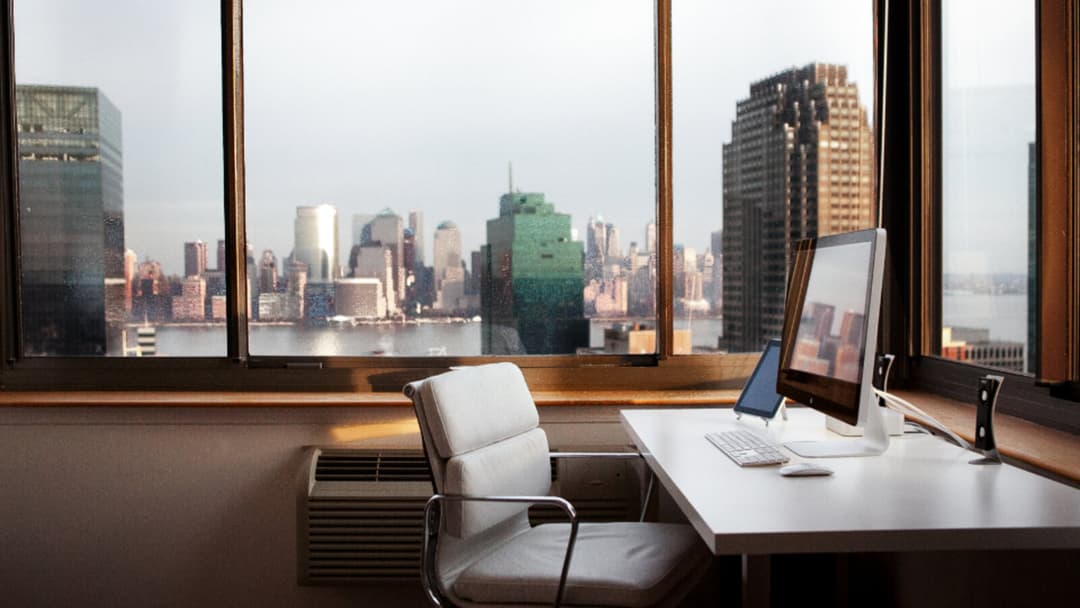
There is a quicker physical check. Stand next to the chair and, following CCOHS adjustment guidance, set the highest point of the seat so it sits just below your kneecap. Sit down, and your feet should meet the floor without your toes stretching or your thighs pressing into the seat. If your feet dangle, the seat is too high; if your knees ride up above your hips, it is too low.
Check the seat depth and back support
Height is only half of the seat. Depth is the other half. CCOHS suggests leaving a clenched-fist gap, roughly 5 cm, between the front edge of the seat and the back of your knees. Slide the seat pan forward or back until a fist fits in that gap with your back against the rest.
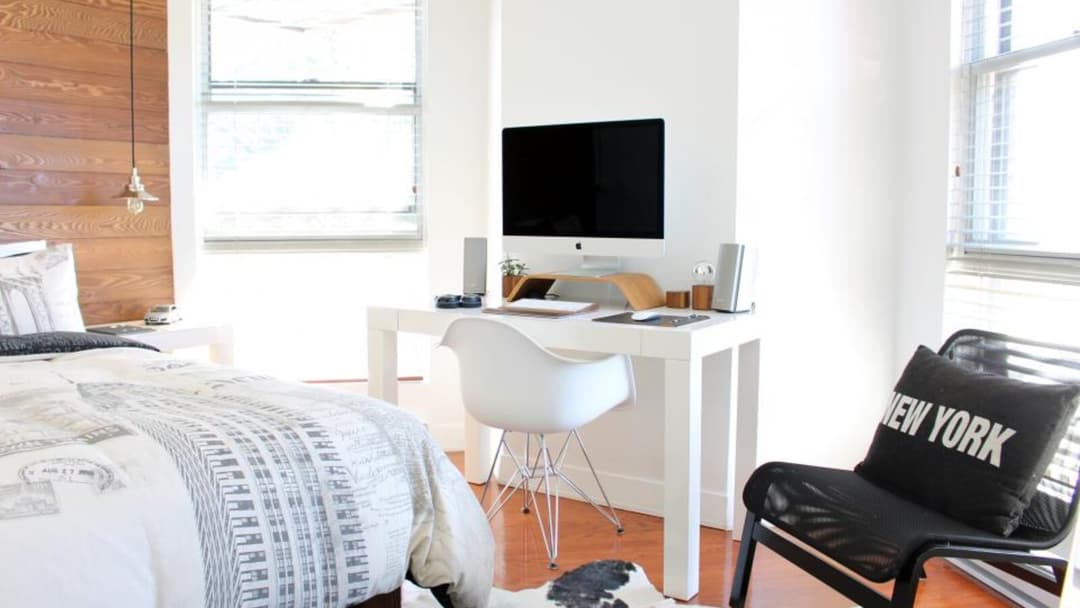
Then the backrest. CCOHS advises a backrest with firm lumbar support that follows the hollow of your lower back, adjustable up and down so the support meets your spine where it actually curves. Set that before you touch the desk. A chair that holds your back changes where your forearms land.
Bring the desk to your elbows
Now, and only now, the surface. Sit as you have set yourself, let your upper arms hang, and bend your elbows. Cornell University's ergonomics guidelines put the elbow angle at or greater than 90 degrees to avoid nerve compression at the elbow, with your wrists kept as flat and straight as you can while typing. The desk should meet your forearms at that angle, so your hands reach the keyboard without lifting your shoulders or dropping your wrists.


This is where a moving surface earns its place. Instead of shimming the chair up and hunting for a footrest, you lower the Vival Desk until your set forearms rest level, and stop. Its top is a walnut-finish laminate, which is a printed surface layer bonded onto the engineered-wood board beneath, matte and low-glare, so your wrists rest on a calm surface rather than a bright one. If you want a number to aim at before you sit, our desk height calculator gives you a seated figure from your height.
When you stand, move the desk, not the chair
Standing changes one thing only. The chair stays exactly as you set it, and the surface rises to your standing elbow height instead. The Vival Desk travels from 72 to 120 cm, which covers a low seated forearm line and a standing one for most adults, so the same desk serves both without moving the chair at all.
The point of alternating is variety rather than standing all day. Our guide to a standing desk routine that lasts covers how often to switch, and the standing desk height guide covers the surface figure for standing. Your chair setup does not change between the two; only the desk does.
Set the screen and wrists last
With the chair and desk right, the screen is quick. Cornell puts your eyes in line with a point about two to three inches below the top of the monitor, so your gaze falls slightly downward and your neck stays neutral. Raise the monitor on a stand or an arm rather than tilting your head to reach it.
Check your wrists one more time as you type. Cornell's guidance keeps them flat and straight, not bent up, down, or off to the side. If your wrists break upward to reach the keys, the surface is a touch high; nudge the desk down a centimetre and look again.
Save it so you never measure twice
The work you have just done deserves to be permanent. On the Vival Desk you save the seated height you found to one of three one-touch presets, labelled M+1, M+2 and M+3, and an LED readout on the controller shows the exact figure as the top moves, so you can note your seated and standing numbers and return to them without measuring again. Set the chair once, save the desk twice, and the daily setup becomes a single tap.
Getting there is not a project. The Vival Desk ships flat-packed, and most people finish assembling it in about 30 to 45 minutes, then lower the surface to meet a chair that is already set. It is a dual-motor sit-stand desk, 120 by 60 cm, with free delivery across Singapore. S$289 with code VIVAL60 (list S$349)
Set the chair to your body. Bring the desk to your elbows. Save both. The rest of the workday takes care of itself.