Standard Table Height: Desk, Dining and Study
A standard dining table is about 71 to 76 cm tall and a desk about 74 to 76 cm. Here are the standard heights for each table, and how to set your own.

Ask what height a table should be and the honest answer is that it depends on the table. A dining table, a kitchen counter, a bar and a work desk are each built to a different height, because each is used sitting up, perching or standing. This guide gives the standard height for each, the chair or stool that goes with it, and, for the one surface where a fixed number rarely fits, a way to find your own. We do not test any desk against a health outcome, and every measurement here comes from published guidance you can open.
The short answer: standard table heights
If you only need the numbers, here they are. A standard dining table is about 71 to 76 cm (28 to 30 inches) tall, with 30 inches the most common, according to Planner 5D's dining-table height guide. The same guide puts a kitchen counter-height table higher, at about 86 to 91 cm (34 to 36 inches), and a bar-height table higher still, at about 102 to 107 cm (40 to 42 inches). A work desk sits a touch below a dining table: Tablemaker puts a fixed desk at 74 to 76 cm, a dining table at about 75 cm, and a standing desk between 95 and 110 cm. Those are the standards. The rest of this guide explains where they come from, and when to set your own instead.
Dining, counter and bar tables
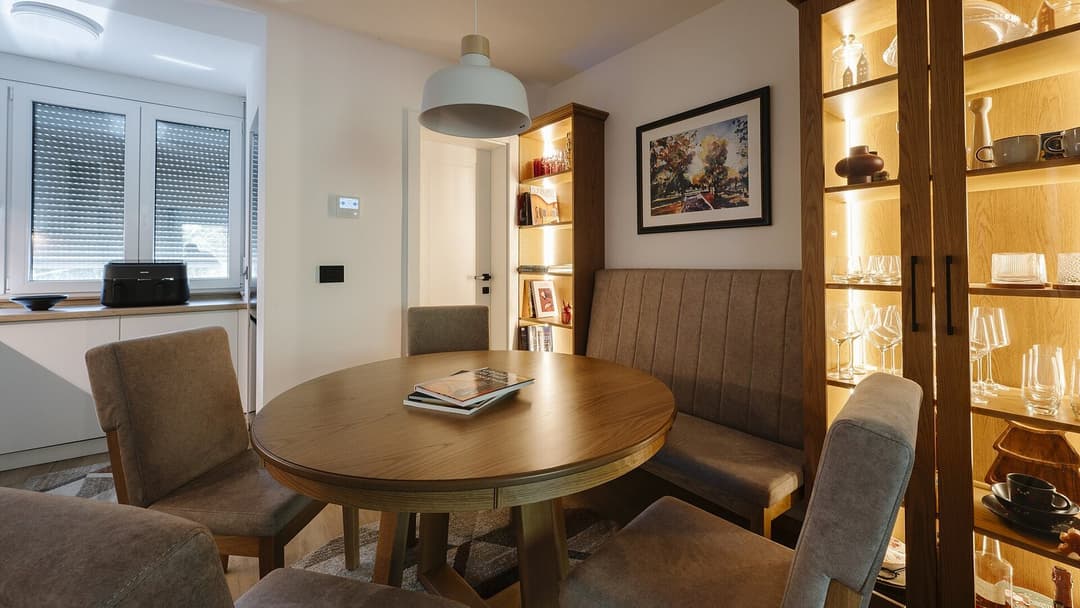

The three surfaces you eat at each come with their own seat, and the seat is what makes the height work. Planner 5D pairs a standard dining table with chairs whose seats sit about 18 inches high. A counter-height table takes taller stools, about 24 to 26 inches in the seat, and a bar-height table the tallest of all, about 28 to 30 inches, in the same guide. The pattern is easy to remember: the taller the surface, the taller the seat that belongs under it. It is also why a stool bought for a kitchen island looks wrong pulled up to a dining table, and why a dining chair leaves you peering over the edge of a bar table.
Why table height and chair height go together
A table height only works alongside the right chair. Sit at a dining table in a chair that is too tall and your knees press up under the top; too low and you reach up to eat. The seat and the surface are a pair, which is why dining sets are sold together and why a standard table quietly assumes a standard chair. The same logic runs under a desk, where it matters more because you are there for hours rather than minutes. OSHA's workstation guidance describes the seated target to aim for: elbows close to the body and bent between 90 and 120 degrees, hands, wrists and forearms straight and roughly parallel to the floor, thighs and hips parallel to the floor, feet supported (or on a footrest where the desk height cannot be changed), and shoulders relaxed. A chair you can raise and a surface at the right height are how you reach that posture.
Desk and study tables: set the height to your body
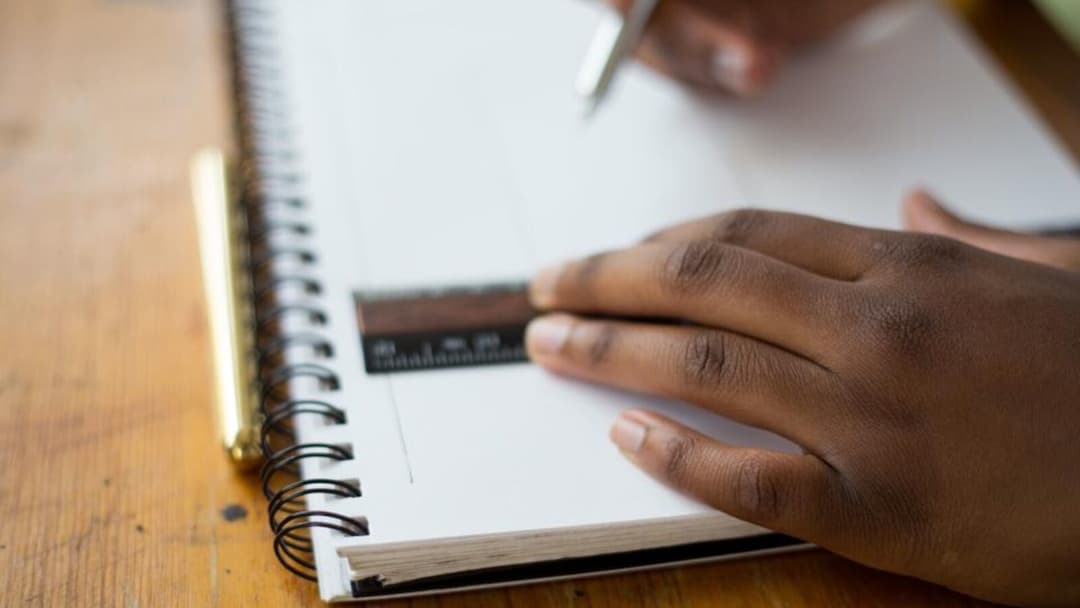
A dining table can live with one standard height because everyone uses it the same way, briefly, sitting up to eat. A desk is different. You sit at it for hours, typing, and the height that keeps your forearms level depends on how long your body is. Tablemaker makes the point plainly: standard sizes are built for an average body, so a taller or shorter person often needs a different height, even though a fixed desk usually lands at 74 to 76 cm. Rather than trust the average, set the surface to your own elbows. CCOHS puts a standing work surface at about your standing elbow height, with elbows close to the body and bent near 90 degrees and your wrists and forearms straight and roughly level, and it keeps the monitor between horizontal and about 35 degrees below your line of sight. Seated, the OSHA target is that same forearms-level line, with elbows between 90 and 120 degrees. A study table for a child follows the rule too, measured to the child rather than the parent, which means the right height changes as they grow.
When one fixed height will not suit everyone
The standards are averages, and averages leave people out. For a tall adult, a 74 to 76 cm desk, Tablemaker's fixed-desk figure, can sit low enough to encourage a slump; for a shorter adult, the feet dangle and the front edge digs into the forearms. A shared corner makes it harder still, where one adult works by day and a child studies by evening at the same surface. One fixed height cannot be both people's elbow height at once. This is the gap a height-adjustable desk closes. The Vival Desk travels from 72 to 120 cm on dual motors, which covers a seated height for a shorter person and a standing height for a taller one on the same frame. It shows its exact height on a lit readout as it moves and stores three one-touch heights on its controller, so each person dials in their own number and presses a single button to bring it back, rather than settling for one fixed top. For the standing number on its own, our standing desk height guide goes deeper, and the desk height calculator gives a starting point from your body height.
Measuring the right height at home
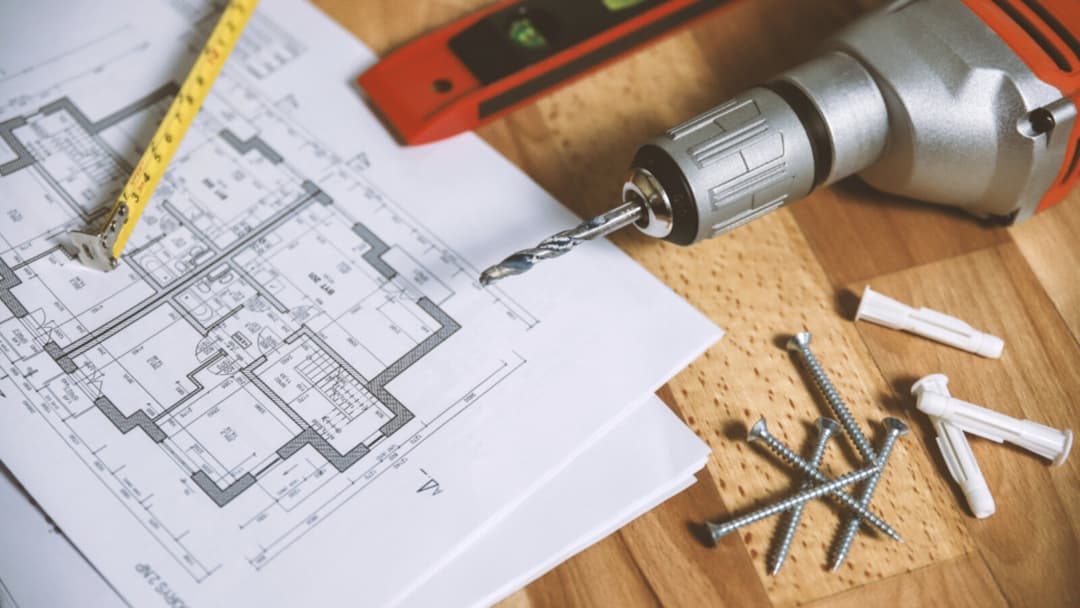
A tape measure settles this faster than any chart. For a desk, sit in your chair the way you actually work, feet flat, and have someone measure from the floor to the underside of your elbow with your forearm level; that number is your seated desktop height, the forearms-level line OSHA describes. For a standing height, measure floor to elbow again while you stand in the shoes you wear at home, since CCOHS sets the surface at your standing elbow. For a dining table, work the other way: sit on a chair you already own and check that your forearms rest comfortably on a surface at the standard 71 to 76 cm from Planner 5D. In a compact HDB room, measure the space as well as yourself: a 120 by 60 cm top fits most bedroom corners, and if you are still choosing the surface itself, our guide to study tables covers the rest. A Vival Desk arrives flat-packed and most people have it together in about 30 to 45 minutes, so you can set your measured height the same evening.
There is a standard height for every table, and for most of them it is all you need. For the desk you sit at all day, measure to your own elbows instead, and when one number cannot serve everyone who uses the surface, a desk that moves will.