Light Bulb Types and Bases: E27, E14, GU10, G9
The common light bulb bases explained: E27, E14, GU10 and G9, what the numbers mean in millimetres, and how to read a bulb box before you buy.
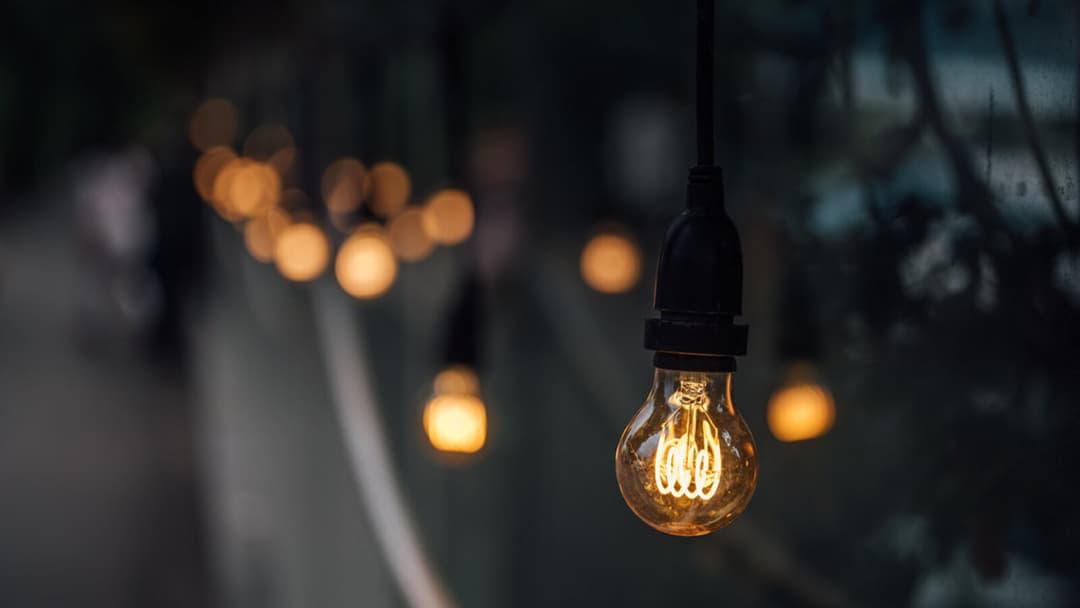
A bulb blows, you take it to the shop, and the wall of boxes all look the same. The one thing that decides whether a replacement will fit is the base: the metal or plastic end that connects the bulb to its holder. Get the base right and almost everything else is a matter of taste. A handful of base codes cover almost every bulb you will meet at home, and once you can read them the wall of boxes gets much smaller.
This is general information to help you match a bulb, not electrical or installation advice.
The base is the part that fits the holder
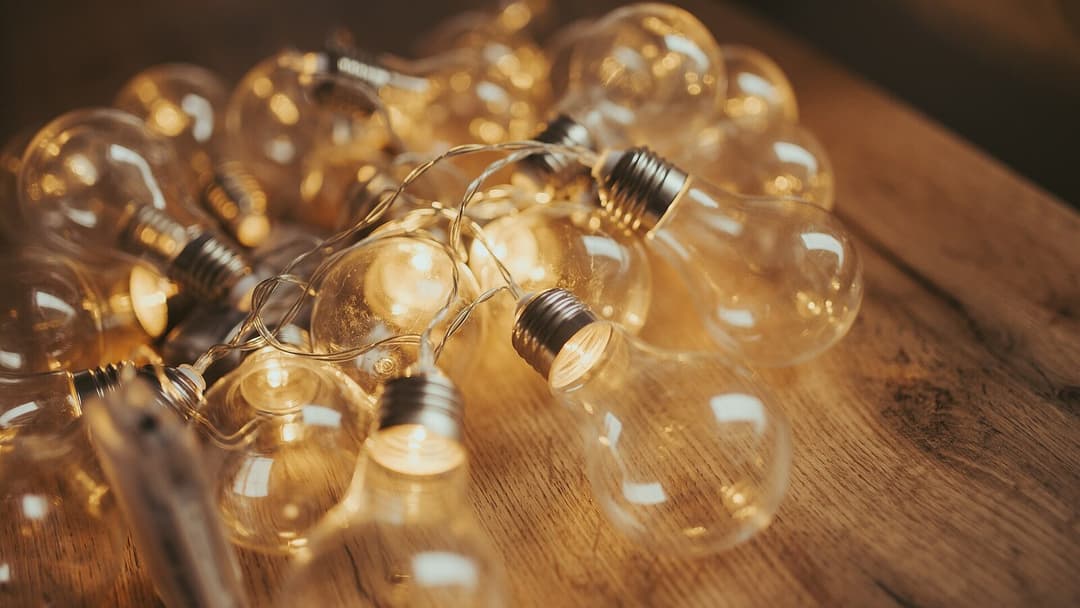
Every bulb ends in a base that is shaped to match one kind of holder and no other. Screw it in, or push and twist it, and the base makes the electrical contact. The code stamped on the base, something like E27 or GU10, is simply a name for that shape. Two bulbs can look identical and still not swap, because their bases differ; two bulbs can look nothing alike and swap perfectly, because their bases are the same.
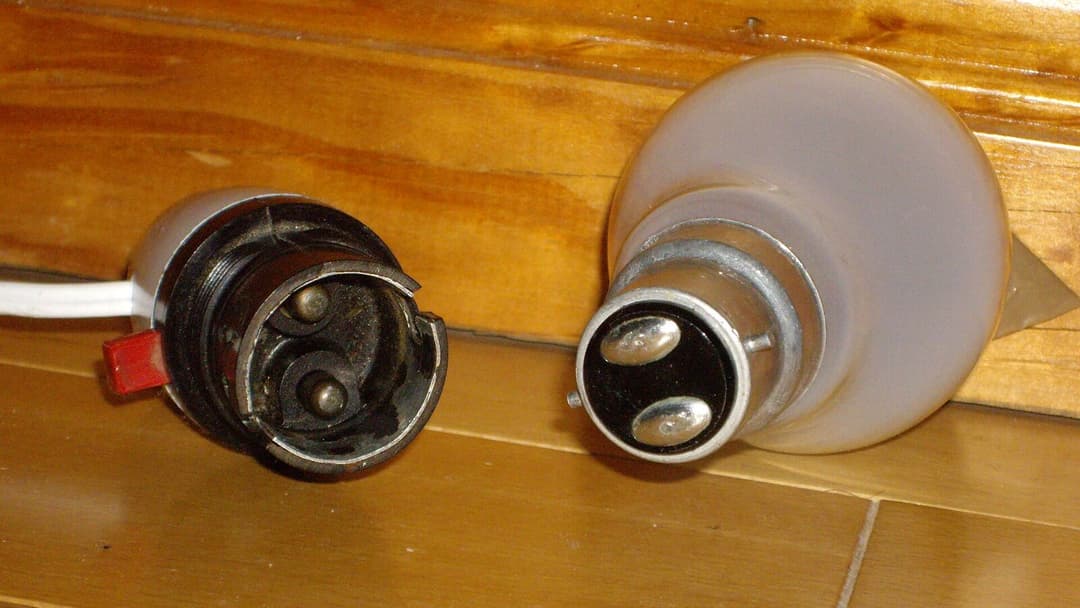
The ones you will meet most at home are E27, E14, GU10 and G9. The first two screw in; the last two have pins. One more turns up in older homes here: the B22 bayonet. A Singapore lighting guide describes the B22 as a smooth base with two small metal pins on opposite sides that you push up into the socket and turn clockwise until they lock into its L-shaped slots, and notes that B22 holders are common in older Singaporean estates, on simple ceiling batten holders and traditional floor lamps. The quickest way to tell which you need is to look at the bulb already in the fitting, or at the empty holder.

What the number in the code means
The letter tells you the family and the number tells you a measurement. On a screw base, the number is the diameter of the base in millimetres: the maker Ledvance gives the example that an E11 has an 11 mm base. So an E27 screw is 27 mm across and an E14 screw is 14 mm across. The "E" stands for Edison, the screw-thread design.
On a pin base, the number is the gap between the pins instead. A G9 is a pin base whose two pins sit 9 mm apart, and a GU10 has its pins 10 mm apart. Same idea, different part of the bulb being measured.
One more number worth knowing lives in the bulb's shape, not its base. In a shape code the letter is the shape and the number is the width at the widest point, measured in eighths of an inch, so the familiar A19 pear shape is about 2.4 inches across. That is why the same E27 base can carry a small round bulb or a big globe.
Screw bases: E27 and E14
The E27 is the big screw most people picture when they think of a bulb. Paulmann, a lighting maker, calls it an Edison screw and one of the most widely used threaded sockets in the world, and lists living rooms and work spaces among its homes. It is the default for pendant lights, floor lamps and many table lamps.
The E14 is its smaller sibling. The thread is 14 mm across, which is where the name comes from, and it turns up in chandeliers, bedside lamps and wall lamps where a slimmer base suits the fitting. If a lamp takes a narrow candle-shaped bulb, it is often an E14.
There is a regional wrinkle. Philips notes that E26 is the standard screw base in North America and E27 is its international equivalent used across Europe; the smaller E12 is the candelabra base, with E14 described as its international version. GE Lighting describes the same pair plainly, listing E26 and E27 as the standard medium screw base and E12 as the smaller candelabra base. For a bulb bought in Singapore you will almost always want the metric codes, E27 and E14.

Pin bases: GU10 and G9
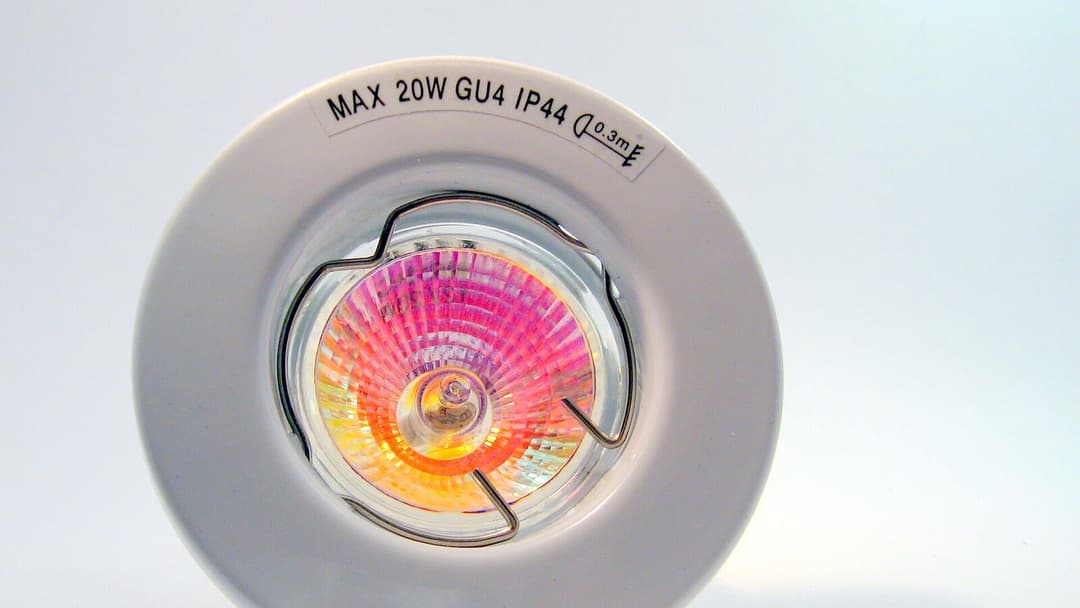
Pins work differently from a thread. The GU10 has two stubby pins that you push in and turn to lock into the fitting, with the pins set 10 mm apart. It is the base you find on ceiling spots, spotlights and track lighting. Paulmann also notes a GU10 bulb will fit a GZ10 holder, but not the reverse, so read the holder if you are unsure.
The G9 is smaller again, a pin base whose two pins sit 9 mm apart. It pushes straight in and shows up in compact wall lights and small decorative fittings. The pins are small and close together, so the 9 mm figure is worth checking rather than judging the bulb by eye.
What the box and the bulb tell you
Once the base is settled, the box answers the rest. The base code is printed on the packaging and usually stamped on the bulb's own metal or plastic base, alongside the shape code and the voltage. Fittings carry their own labels too, which tell you the cap they take and the most the fitting is rated for.
The number that trips people up is brightness. For decades we judged a bulb by its wattage, but an LED makes the same light on a fraction of the power, so wattage no longer tells you how bright it is. Energy Star is blunt about it: brightness is measured in lumens, not watts. As a rough anchor, it gives about 800 lumens as the brightness of a traditional 60-watt bulb. Read the lumens for how bright, and the wattage only for how much power it draws.
Buying a replacement bulb in Singapore
If you can, take the old bulb with you, or photograph its base and the code on it. With the power off and the bulb cool, the code is easy to read, and it removes all the guesswork at the shelf.
It is also worth knowing what the safety label means. Singapore's Consumer Product Safety Office, under Enterprise Singapore, states that 33 categories of household electrical, electronic and gas goods must be tested, registered and carry the SAFETY Mark before they can be sold here. The mark is a safety logo with the words "SAFETY MARK" in a rectangle. A light bulb is not one of those categories: the Office's own list of controlled goods has no bulb entry, though it does list a "Table lamp/ standing lamp", the kind of portable lamp you might add at a desk. Treat that as general information, and follow the maker's and the retailer's own instructions for any product.
A lamp at the desk corner
Most of this matters at a desk when you add a task lamp. Pick the lamp for the light you want, check its base so you can replace the bulb later, and leave room for it beside the screen. If you want to go deeper on brightness, colour and cutting glare at a work surface, our guide to study desk lighting covers it, and our note on desk accessories covers what else earns a place on the top.
The Vival Desk gives a lamp somewhere sensible to live. Its top is 120 by 60 cm, which our FAQ says suits most desk nooks and holds a single or dual-monitor setup without overhang, so a lamp sits at the corner rather than crowding the screens. The top is a matte, low-glare walnut-finish laminate (a printed surface layer bonded onto the board) over an engineered-wood core, a flat and non-glossy surface for a lamp to stand on, and the frame raises from 72 to 120 cm and is rated to hold up to 100 kg. Those published specs cover the desk itself; they say nothing about any lamp, bulb or wiring, which are the maker's business and yours. S$289 with code VIVAL60 (list S$349)
If you are still building the corner from scratch, the first-flat workspace guide walks through the rest of the setup.