Are L-Shaped Desks Worth It? A Singapore Guide
An L-shaped desk gives you two work zones but claims more floor. Here is how to judge whether one earns its place in a compact Singapore home.
Two desks in one, folded neatly into a corner. That is the promise of the L-shape, and for the right room it is a real one. You get a long main wing for your screen and keyboard, a second wing at a right angle for paper, a printer or a laptop, and you reclaim a corner that was probably holding nothing but dust.
Here is the short answer before the detail. A corner desk earns its keep when you have the floor to spare and you genuinely work in two modes at once, screens on one side and hands-on work on the other. In a compact HDB or BTO bedroom, where every square metre is doing three jobs already, a single straight top usually serves you better for less money and far less fuss. The rest of this guide is how to tell which of those is you.
What an L-shaped desk actually is
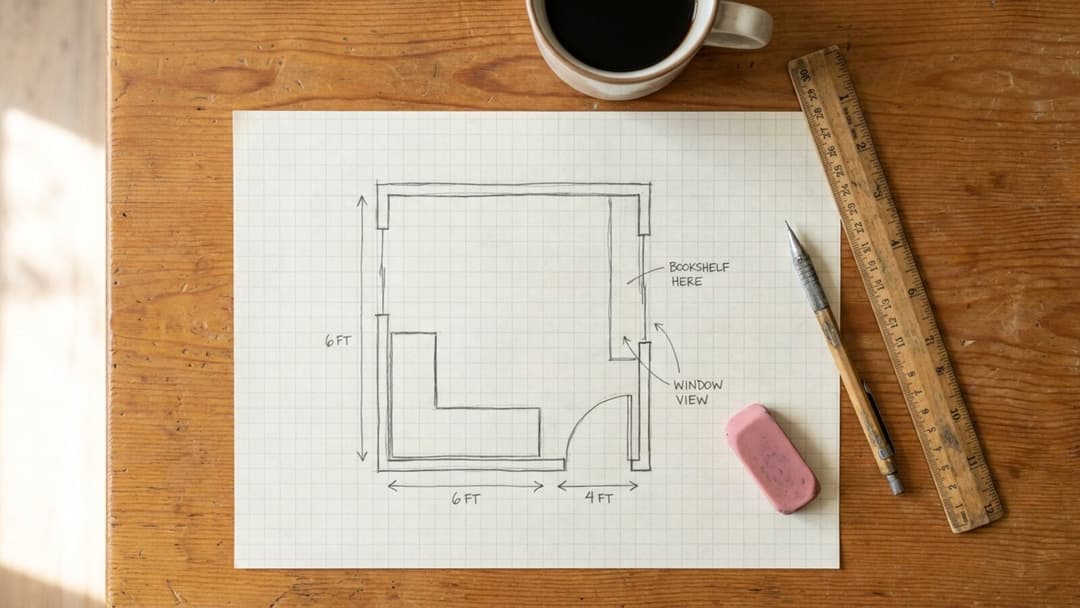
An L-shaped desk is two work surfaces joined at a right angle so the whole thing wraps into a corner. One wing is usually the longer main run where your monitor and keyboard live. The shorter return sits at a right angle to it, within a swivel of your chair. Some are one moulded piece, some bolt together from two tops and a shared leg, and a growing number are height-adjustable so both wings rise together.
A straight desk is the opposite idea: one rectangle against one wall. Our own Vival Desk is that shape, a single 120 by 60 cm top on a dual-motor frame. The difference is not just form. It changes how much floor you give up, how your cables run, and how you sit, and each of those is worth thinking through before you commit.
The case for the L-shape
The strongest argument is two zones. On a long wing you can keep a monitor, keyboard and mouse set up for focused screen work, and on the return you can spread a notebook, sketchpad or documents without shoving your keyboard aside every time. If your day really does swing between typing and hands-on work, that separation is genuinely useful.
The second argument is the corner itself. A right-angle layout slots into space most furniture ignores, which can leave the centre of a room clear. And if you run more than one monitor, the two wings give screens somewhere to sit within a chair swivel rather than in a straight, wide row.
Those are real gains. The catch is that every one of them assumes you have the floor to give, and that is exactly where a Singapore home starts pushing back.
What it costs you in a Singapore home
An L-shape looks space-saving because it hides in a corner, but it almost always covers more floor than a straight desk, not less. Two wings mean two runs of leg-room in front of them, and a chair that needs to reach both. A corner that used to be walk-through space becomes a fixed workstation.
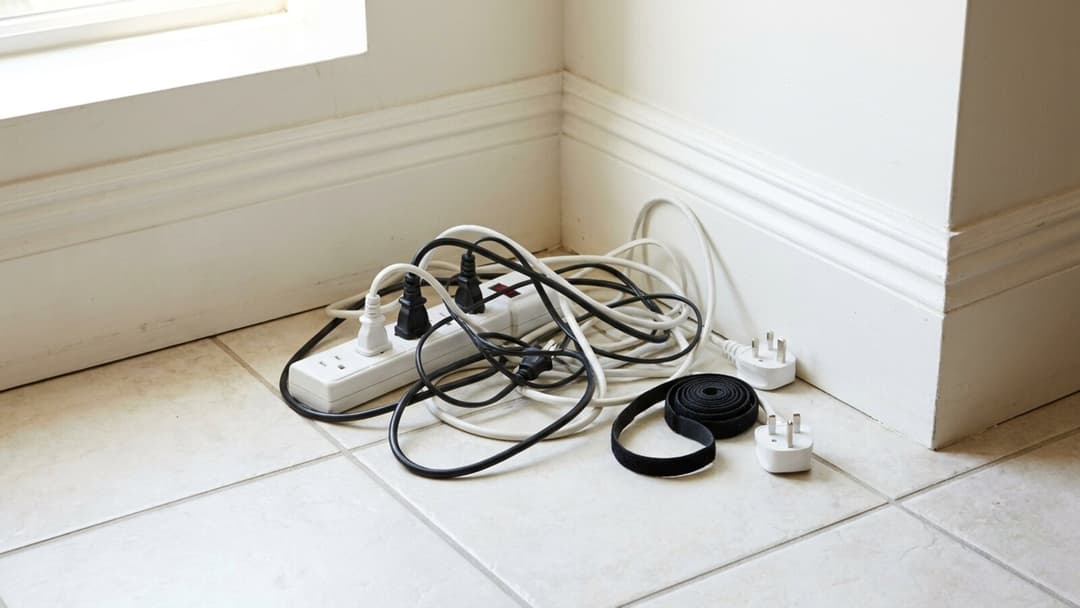
Cables are the quieter cost. On a straight desk everything drops down one edge to a single point. In a corner, power and data have to travel into the deepest, most awkward part of the room, and the inside angle collects a knot that is a pain to reach once the desk is in place.
Then there is moving day. A large corner desk, especially two bolted tops on a shared frame, is heavier and clumsier to shift, and it rarely fits a new room the same way. If you rent, or you expect to rearrange, a shape that is locked to one corner is a shape that limits you.
Getting the ergonomics right on a corner desk
A common mistake with corner desks is to push the main monitor into the diagonal, right where the two wings meet. That tends to seat the screen too far away and turns the corner into a place your neck twists toward. The fix is to treat one wing as your primary line of sight.
The distances are not a matter of taste. Guidance from OSHA's computer workstations eTool puts the preferred viewing distance between 50 and 100 cm from your eyes, with the top of the screen at or slightly below eye level, and it advises keeping any monitor no more than 35 degrees to the left or right so your head, neck and torso stay facing forward. If a corner layout parks a screen further round than that, the shape is working against you.

For more than one screen, Canada's CCOHS office ergonomics guidance is blunt and useful: about an arm's length is a good starting distance, and you place the monitor you use most directly in front of you as if it were your only one, with the secondary screen off to one side at an angle. An L-shape can make that easier because the return gives a natural home for the second screen. It does not do it automatically. Height matters as much as position, and if you are dialling that in, our standing desk height guide walks through it.
Does it fit an HDB or BTO room?
This is where most Singapore buyers should be honest with themselves. A typical HDB bedroom is already carrying a bed, a wardrobe and a walkway. Give a corner over to two desk wings and the room can feel smaller than the desk's clever footprint suggests, particularly once an office chair needs clearance behind it.
A single straight top is easier to place. It sits flat against one wall, leaves the corner and the floor around it open, and keeps a small room feeling like a room. We made that case in detail in why a 120 by 60 desk fits an HDB room, and it holds here: for compact spaces, the constraint is rarely how much desk you want and almost always how much floor you have. If you are still weighing shapes and sizes generally, how to choose a standing desk covers the wider decision.
The straight-desk alternative
If the honest read on your room is that an L-shape would crowd it, the alternative is not a compromise. A 120 by 60 cm surface holds a single or dual-monitor setup without overhang, and one long top can still hold two loose zones, screen work on one end, paper on the other, without eating a second run of floor.
The Vival Desk is built for that job: dual motors and a reinforced metal frame, a height range of 72 to 120 cm for sitting and standing, three one-touch memory presets with a digital height readout, and a load rating up to 100 kg. The top is a matte walnut-finish laminate over an engineered-wood (MDF) core, and the motor system carries a one-year warranty. S$289 with code VIVAL60 (list S$349)
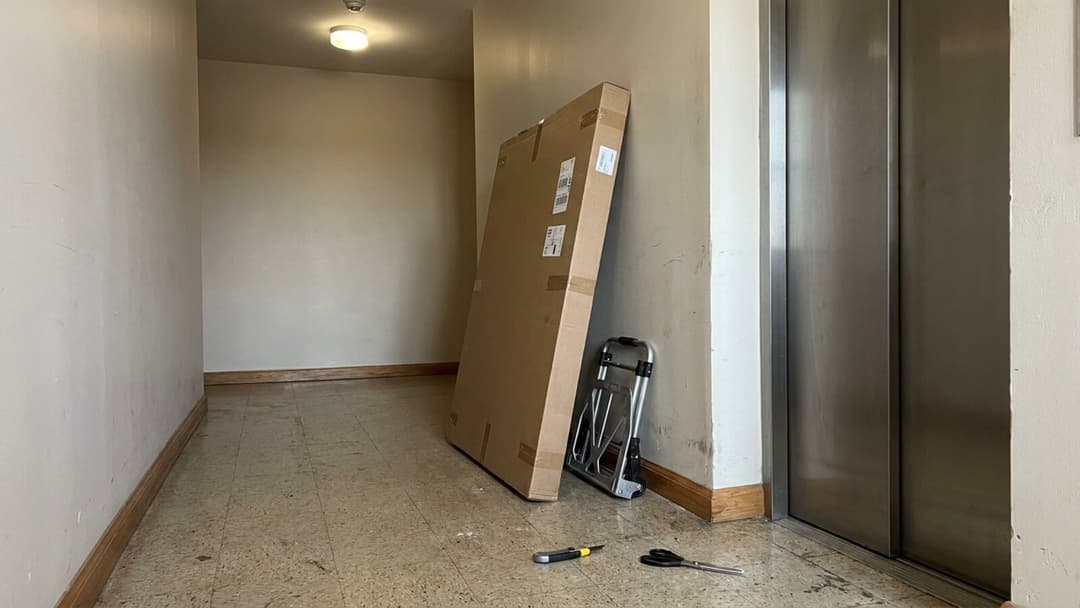
Two things a spec sheet will not tell you. It arrives flat-packed for self-assembly, one person can manage it, and most people are done in about 30 to 45 minutes, per our FAQ. And delivery is free across Singapore, dispatched within 2 business days and arriving 2 to 3 business days after that, as our shipping page sets out. A single flat top is also simpler to carry in and, later, to move.
If the material question is on your mind, we set out the trade-offs in engineered wood versus solid wood.
So, are they worth it?
Whether an L-shaped desk is worth it comes down to two questions, and both are about your room, not the desk. Do you have floor to spare after the bed, the wardrobe and the walkway? And do you truly work in two modes at once, often enough to want them side by side? If the answer to both is yes, a corner desk is a fine buy and the two zones will feel like a luxury.
For most compact Singapore homes, at least one answer is no, and then the smarter choice is a single straight top that fits the wall, keeps the corner open, and moves with you when the room changes. Buy for the room you have, not the office you are picturing.